 Skip-the-line available
 The History and Archaeology of Castelo de São Jorge
Twenty-six centuries of continuous fortification on a single hilltop. A layered chronological guide to the people, the walls and the discoveries that make the castle one of Iberia's longest-occupied sites.
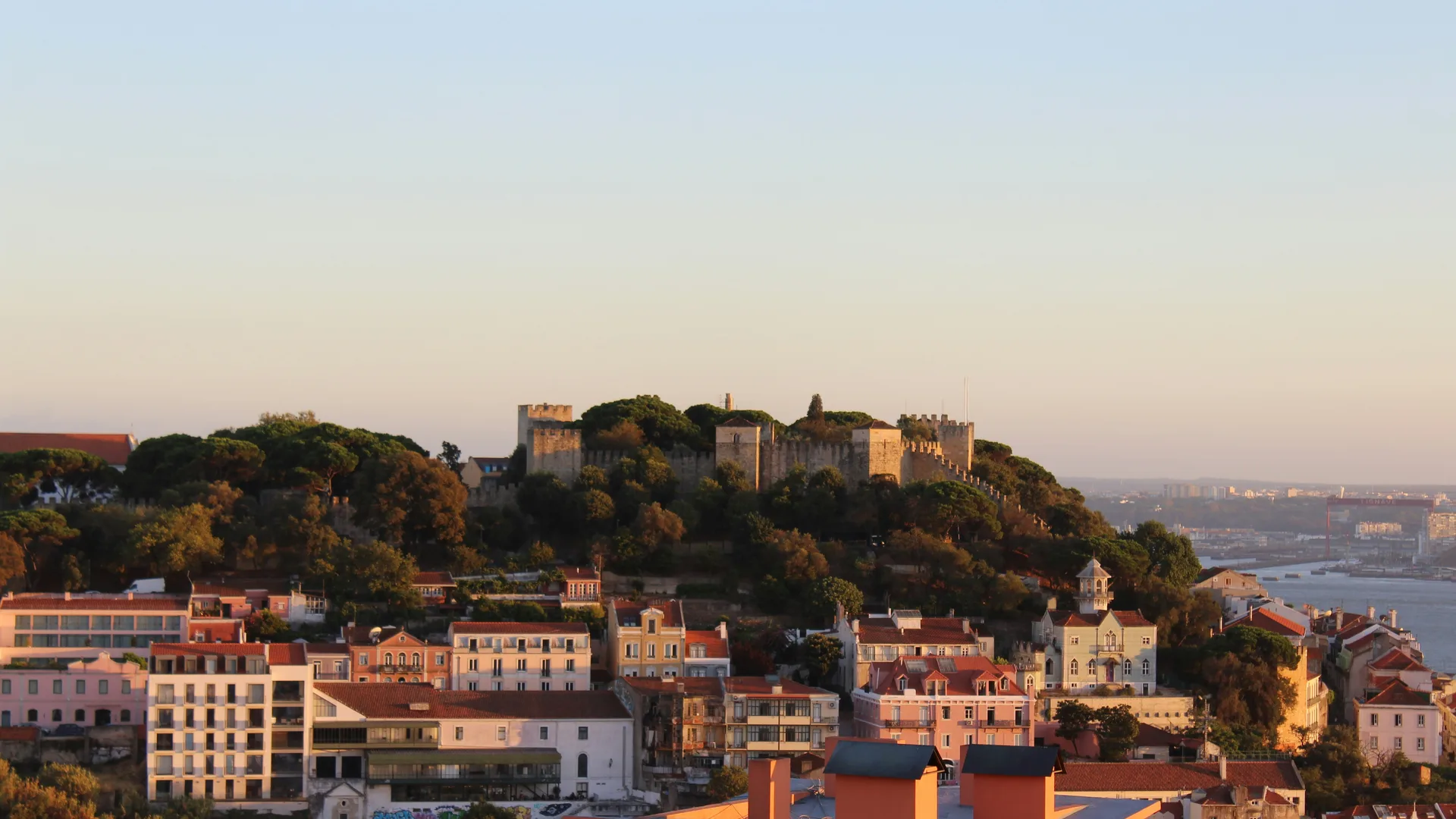
Few sites in Iberia have been continuously occupied for as long as the hilltop of São Jorge. The first defensible settlement here dates from around the sixth century before the common era, and from that point onward the hill has been fortified, expanded, conquered, rebuilt, ruined and restored by every major civilisation that touched Lisbon — Lusitanians, Phoenicians, Carthaginians, Romans, Visigoths, Suevi, Moors, Christian Crusaders, medieval Portuguese kings, sixteenth-century Spanish occupiers, the great earthquake of 1755, and finally a twentieth-century state-led restoration under the Estado Novo regime. The result is a layered archaeological landscape where eleventh-century Moorish stonework sits next to medieval Christian additions, sixteenth-century palace foundations, eighteenth-century earthquake damage and mid-twentieth-century restoration masonry, all visible if you know what to look for. This concierge guide walks you through the site as a working historian would — chronologically, layer by layer, with attention to what is documented in contemporary sources, what is hypothetically reconstructed and what remains genuinely uncertain. The aim is not to memorise dates but to give your eye the framework it needs to see twenty-six centuries of building in a single morning.
Before the Moors: Pre-Roman and Roman Olisipo
Archaeological excavations on the hilltop, most extensively those conducted in the nineteen-thirties and forties under the architect-archaeologist Augusto Vieira da Silva and subsequently by the Centro de Arqueologia de Lisboa from the nineteen-eighties onward, have produced evidence of a fortified Iron Age settlement dating from around the sixth century before the common era. The finds include pottery shards, fragments of defensive walls and a cistern attributable to the Lusitanian peoples or their predecessors. The hill's natural defensive advantages — steep approaches on three sides and a clear view down the Tagus — made it the obvious site for a central settlement long before any of the historical empires arrived.
The Romans, who absorbed the city as Olisipo Felicitas Julia in the late second century before the common era, fortified the hill and used it as the urban acropolis. Roman-era walls, a domestic quarter with surviving mosaics, and a stretch of paved street are visible in the archaeological garden inside the inner walls, near the modern entrance to the permanent exhibition. Interpretive panels mark the principal Roman features. The Roman occupation lasted more than five centuries — long enough to leave a substantial built environment under the later Moorish and Christian layers — and the modern street plan of the lowest part of the city below still follows Roman alignments in places.
The Moorish Citadel: al-Ushbuna in the 11th Century
After the Muslim conquest of the Iberian peninsula in 711 the city became known in Arabic as al-Ushbuna, and the hilltop was rebuilt as the citadel of the local taifa. The bulk of the walls visible today — the eleven towers connected by curtain walls, the inner alcazaba, the cisterns and the foundations of the governor's palace — date in their core to the eleventh century, when Lisbon was a frontier city of the Taifa of Badajoz. The masonry is a characteristic mixture of rammed earth, rubble masonry and reused Roman stone, with the distinctive horseshoe-arched gateway forms typical of Andalusi military architecture.
Excavations in the inner palace zone since the nineteen-nineties have exposed the foundations of a Moorish-quarter neighbourhood with houses arranged around small courtyards, communal cisterns, and a modest mosque, now displayed under protective shelter for visitors. The neighbourhood gives an unusually intimate sense of how the citadel's inhabitants actually lived: not as soldiers in a barracks but as a dense urban community with markets, prayer space and family houses, all arranged in the narrow-laned organic pattern characteristic of Andalusi cities elsewhere in Iberia and North Africa.
The patron saint to whom the castle is now dedicated, São Vicente, has a separate but linked history: his remains, according to medieval Portuguese tradition, were brought to Lisbon by sea from the Algarve shortly after the Christian conquest, guided by two ravens — an iconography that has become Lisbon's city symbol. The dedication of the citadel to São Jorge, Saint George, came later, in honour of the Crusader knights who joined the eleven-forty-seven siege. The double saintly heritage — São Vicente as the city's patron, São Jorge as the citadel's — is one of the layered religious narratives that the site embodies.
1147: The Conquest by Afonso Henriques and the Second Crusade
The defining event in the castle's documented history is the siege of Lisbon from the first of July to the twenty-fifth of October 1147, when forces under Afonso Henriques, the first King of Portugal, supported by a Crusader fleet of Anglo-Norman, Flemish and Rhenish ships diverted from the Second Crusade, captured the city from its Muslim defenders. The siege is documented in unusual detail by the contemporary Anglo-Norman cleric known as the priest Raol in the chronicle De Expugnatione Lyxbonensi, On the Conquest of Lisbon — one of the richest first-hand accounts of any twelfth-century siege in Europe.
The Crusaders had stopped in Porto en route to the Holy Land and were persuaded to assist the young Portuguese king in exchange for the spoils of the city. The siege lasted seventeen weeks, with starvation and disease inside the walls finally forcing the surrender. After the capitulation on the twenty-fifth of October, the citadel was renamed for Saint George, patron of the Crusader knights, and gradually adapted as the royal residence of the new Portuguese kingdom. The conquest date is marked annually in Lisbon's civic calendar and remains one of the central foundation moments in the Portuguese national narrative.
Royal Residence, Earthquake and 20th-Century Restoration
From the reign of Afonso III, who moved the Portuguese capital from Coimbra to Lisbon in the mid-thirteenth century, until the Iberian Union of 1580 placed Portugal under Spanish rule, Castelo de São Jorge served as the principal royal residence. Successive monarchs extended the Moorish core with a Christian palace complex known as the Paços da Alcáçova, of which only foundations and a few walls survive today, visible in the archaeological zone east of the inner walls. The most significant additions were made under João I in the late fourteenth century and Manuel I in the early sixteenth, when Portugal was at the height of its maritime expansion and the court demanded ceremonial spaces to match.
After 1580 the court moved progressively to the Paço da Ribeira at the riverside, and the castle declined into a military barracks and prison. The great Lisbon earthquake of the first of November 1755, with its accompanying tsunami and fires, severely damaged the upper city and effectively ended the castle's residential function. For nearly two centuries the site served as a military prison and barracks, with much of the medieval fabric obscured by eighteenth- and nineteenth-century military additions that visitors today would not recognise as the medieval citadel at all.
Between the late nineteen-thirties and early nineteen-forties, under the Estado Novo regime, the architect Baltasar de Castro carried out a large-scale restoration that demolished most post-medieval additions, stabilised the Moorish walls, reconstructed several towers to a hypothetical medieval form and laid out the present pine-shaded courtyard and panoramic terrace. The restoration is itself a historical document: it reflects mid-twentieth-century nationalist preferences for a Crusader-Christian reading of the site, and it is now studied as critically as the medieval fabric it sought to reveal. Visitors with an eye for masonry differences can often spot where original Moorish stonework ends and twentieth-century reconstruction begins.
Frequently asked
How old is Castelo de São Jorge?
The hilltop has been continuously fortified for over two and a half thousand years, with evidence of an Iron Age settlement from around the sixth century before the common era. The Moorish citadel whose walls form the bulk of the surviving fortifications dates to the eleventh century.
Who built Castelo de São Jorge?
The visible walls and towers were built by Muslim rulers of the Taifa of Badajoz in the eleventh century, on top of earlier Roman and pre-Roman fortifications. The Christian medieval palace and the 1938-40 restoration added further layers.
When was Castelo de São Jorge captured by the Portuguese?
On the twenty-fifth of October 1147, after a four-month siege led by Afonso Henriques, the first King of Portugal, supported by Crusader forces of the Second Crusade. The event is documented in the contemporary chronicle De Expugnatione Lyxbonensi.
Why is it called São Jorge?
The citadel was renamed after Saint George, patron saint of the Crusader knights who helped capture the city in 1147. It had previously been known by its Arabic name as part of al-Ushbuna.
Was Castelo de São Jorge a royal palace?
Yes, from the mid-thirteenth century when Afonso III moved the capital to Lisbon until the late sixteenth century, when the court moved to the Paço da Ribeira on the riverfront. The palace complex was known as the Paços da Alcáçova.
What damage did the 1755 earthquake cause?
The great earthquake of the first of November 1755 severely damaged the upper city, including much of the castle's medieval and Renaissance palace fabric. The site lost its residential function and was repurposed as a military barracks and prison.
What did the 1940 restoration change?
The 1938-40 restoration under architect Baltasar de Castro demolished most post-medieval military additions, stabilised the Moorish walls, reconstructed several towers to a hypothetical medieval form and created the present landscaped courtyard and panoramic terrace.
What archaeological remains can I see today?
The archaeological zone includes Iron Age and Roman walls, Moorish-quarter house foundations, cisterns, the foundations of the medieval royal palace (Paços da Alcáçova), and stretches of Roman paved street, with interpretive panels.
Is Castelo de São Jorge a UNESCO World Heritage Site?
The castle itself is not individually inscribed, but it lies within Lisbon's historic core and is a classified National Monument of Portugal, protected under Portuguese heritage law since the early twentieth century.
Who manages the castle today?
The site is operated by the Castle, a public cultural-management company of the Lisbon City Council, which also programmes exhibitions, concerts and the seasonal Christmas market.