 Skip-the-line available
 Visiting Castelo de São Jorge with Kids
One of the most child-friendly major monuments in Lisbon — eleven ramparts to walk, peacocks roaming the pine grove, a camera obscura that draws gasps. A concierge guide for parents planning a family day on the castle hill.
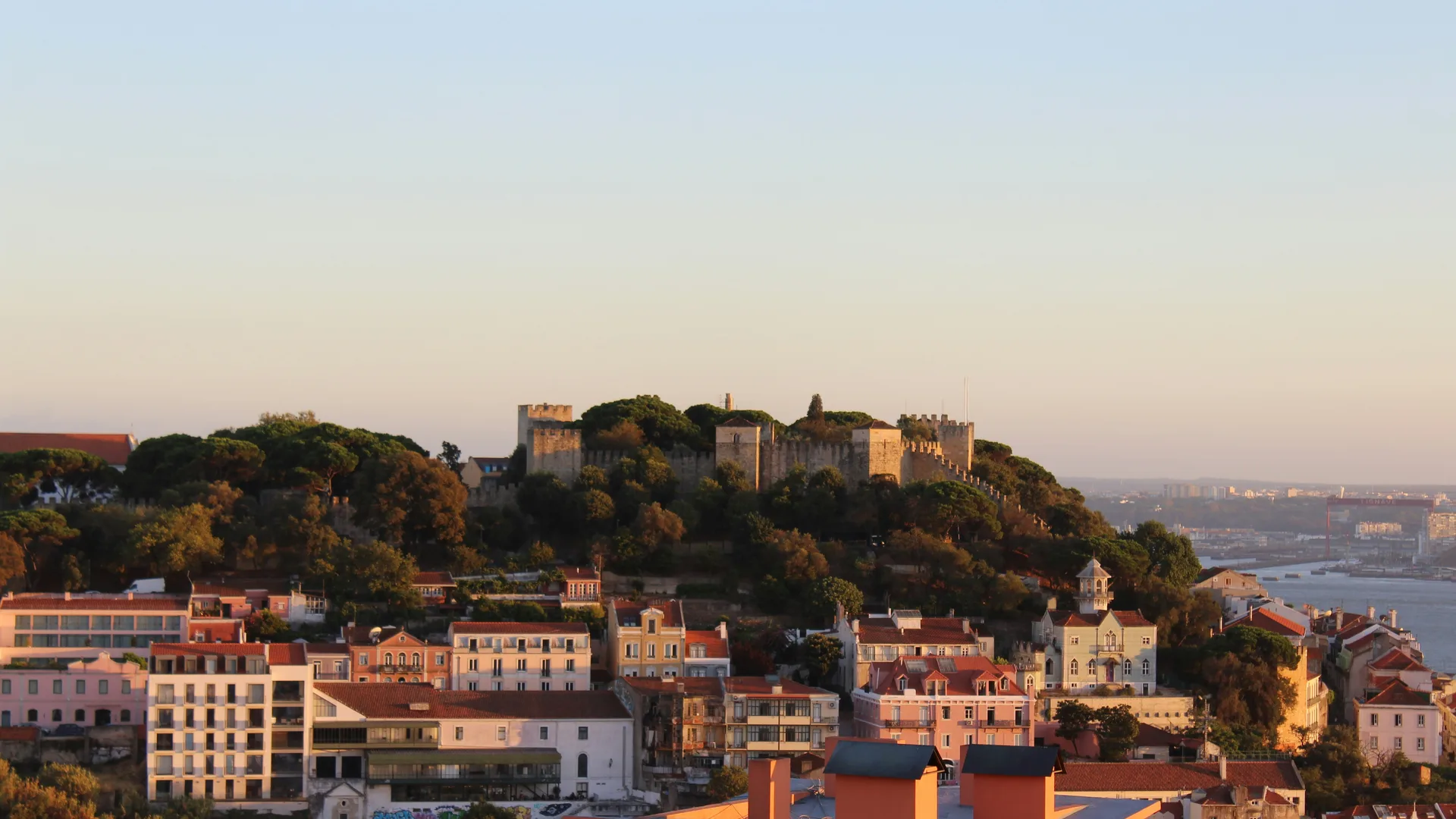
Castelo de São Jorge is one of the most child-friendly major monuments in Lisbon, and parents who have battled their way around stricter museums elsewhere in Europe are often surprised at how welcoming the site is. There are eleven ramparts to walk along, a pine-shaded courtyard where peacocks roam freely, a camera obscura that projects a live image of the city onto a parabolic dish, an archaeological garden where children can spot Moorish walls and Roman mosaics, and a generous amount of unstructured outdoor space — a rarity in central Lisbon. the Castle, the public-cultural-management company that operates the castle, offers a reduced or free admission band for younger children, which makes the site one of the better-value family outings in the city. This concierge guide is written specifically for parents: it covers when to arrive, what to bring, where to focus the visit, what the genuine safety considerations are, and how to combine the castle with the rest of Alfama for a full but manageable family day. The aim is to leave you confident that the visit will work for your particular family, rather than rushing to fit the operator's standard itinerary.
Why Kids Love It: Peacocks, Ramparts and the Camera Obscura
Three features of Castelo de São Jorge tend to win over even the most reluctant young visitor. The first is the resident flock of free-roaming peacocks who wander the pine-shaded inner courtyard and along the lower ramparts. The birds are entirely habituated to people, will walk within a few feet of a quiet child, and frequently display their tail feathers during spring and early summer. For families with children under ten, the peacocks alone are often the most-talked-about part of the day, and many parents are surprised at how long their children will sit watching a single male display.
The second feature is the network of walkable ramparts: eleven towers connected by curtain walls, with stairs, narrow passages, parapets and small alcoves that turn the visit into something close to a real-world adventure playground for ages six and up. Children with good map sense enjoy tracing the route from tower to tower; younger children enjoy the simple physical experience of climbing and the views from each level. Unlike many European castles where the upper walls are off-limits, here the ramparts are the main attraction, and the freedom to walk them genuinely matters.
The third feature is the camera obscura inside the Tower of Ulysses, where a periscope and lens system projects a live three-hundred-and-sixty-degree image of Lisbon onto a circular dish in a darkened room. Demonstrations run every twenty minutes or so and consistently draw audible reactions from children seeing it for the first time. The combination of darkness, the slow rotation of the projected image, and the realisation that they are watching live cars and boats and people moving across the city below tends to land for children from about five years upward — and quite often for parents too.
Best Time to Arrive with Children
Concierge experience strongly favours arriving within thirty minutes of opening when travelling with children. The site is at its coolest, the ramparts are nearly empty, the peacocks are most active in the morning, and the first camera-obscura demonstrations of the day run with smaller, more attentive groups rather than the larger crowds that build through midday. Mid-morning attention spans align well with the natural sequence of the visit: arrival, archaeological garden, ramparts, camera obscura, snack break in the pine courtyard, second loop of favourite spots, exit by late morning before fatigue sets in.
Avoid the midday window in summer. The unshaded ramparts grow uncomfortably hot in July and August, and a single overheated afternoon can sour an otherwise excellent family memory of Lisbon. If your family is jet-lagged on arrival in Portugal and the only available window is afternoon, target the final two hours before closing rather than the middle of the day — the light is softer, the temperature drops, the peacocks become active again, and the natural exit point coincides with dinner time in the city below. The worst possible combination is midday arrival in midsummer with under-tens; this is the family-day pattern most likely to end in tears.
Safety Realities on the Ramparts
Parents should be aware that Castelo de São Jorge is a real medieval fortification, not a theme park, and the safety standards reflect that. The ramparts have low parapets in places — typically around waist-height for an adult — and several drop-offs that would be fenced off in a modern attraction. The stones are uneven, occasionally slippery in damp weather, and the staircases lack handrails in several sections. This is not a reason to skip the visit, but it is a reason to set expectations and choose your route deliberately rather than letting young children wander out of sight.
Children should hold a parent's hand on the upper walls and on the approach to the Tower of Ulysses, particularly when the cobbles are wet. Toddlers under three are easier in a baby carrier than a stroller — most ramparts are inaccessible to wheels, and the steps between sections make wheeled transport impractical. Closed shoes are essential for everyone in the family; open sandals slip on the polished medieval stone, and a fall on uneven cobbles is the single most likely incident on the day. A small first-aid kit with plasters covers the most likely scraped knee.
The archaeological zone and the inner courtyard are much more forgiving environments. The pine-shaded grass and gravel paths are level, the protective shelters over the excavated Moorish quarter mean children can look down into the ruins without climbing over them, and the courtyard itself is enclosed enough that an inattentive parent can briefly look away without panic. Many concierge clients find that splitting the day between cautious rampart time and more relaxed courtyard time produces the best rhythm — one parent on close-watch on the walls, then both relaxing over coffee while the children chase peacocks at a safe distance.
What to Bring and Pairing with the Rest of Alfama
For a comfortable visit with children, pack water (at least half a litre per person in summer), hats, high-factor sunscreen, a light snack, closed shoes, and a small first-aid kit. The on-site café in the inner courtyard offers cold drinks, ice cream, sandwiches and pastries, and the pine-shaded tables nearby are the best break point in the middle of the visit — shaded, supervised, and within sight of the peacocks. There are clean public toilets near the main entrance and again near the panoramic terrace, including baby-changing facilities near the entrance toilets. The on-site shop carries a small selection of children's books on Portuguese castles and history that travel well as souvenirs.
A full family day in this part of Lisbon works best when the castle anchors the morning and Alfama fills the afternoon. After the castle, walk down through the Largo das Portas do Sol and the Miradouro de Santa Luzia — two viewpoints that are flat, breezy and pram-accessible — and on to the Sé de Lisboa cathedral, which has its own modest archaeological cloister that older children find genuinely engaging. Lunch at a small family-run tasca on Rua de São João da Praça keeps the family within easy walking distance of either a return to your hotel or an afternoon at the Museu do Fado, which is unexpectedly child-friendly thanks to listening booths and short audio clips.
Avoid combining the castle with Belém on the same day for families with children under eight. The cumulative walking, the queue at Belém Tower's spiral staircase, and the travel time between sites are too much for younger legs and shorter attention spans, and the day usually ends with a meltdown that nobody remembers fondly. Splitting the two attractions across two days produces a far better experience, with the castle and Alfama anchoring one day and Belém Tower plus Jerónimos Monastery anchoring the other. If you have only a single day in Lisbon with young children, choose the castle without hesitation.
Frequently asked
Is Castelo de São Jorge suitable for young children?
Yes. The ramparts, peacocks and camera obscura make it one of the more child-friendly major monuments in Lisbon. Ages four and up tend to engage strongly with the site; toddlers do best in a baby carrier rather than a stroller.
Is the castle free for children?
the Castle offers reduced or free admission for younger children. Always confirm the current age threshold and pricing on your ticket before travelling.
Can I bring a stroller?
A stroller is fine in the lower courtyard and near the café, but the ramparts, archaeological site and Tower of Ulysses are not stroller-accessible. A baby carrier is much more practical for the full visit.
Are the peacocks always there?
Yes — the resident flock of peacocks lives on site year-round, roaming the pine-shaded inner courtyard and lower ramparts. They are most active in the mornings and during the spring-summer breeding season when the males display their tail feathers.
How long should we plan with children?
Two to two and a half hours is a comfortable family visit: archaeological garden, ramparts, camera obscura, café break, peacock-spotting and a return loop to favourite spots. Allow three hours if you want a long break in the courtyard.
Is the camera obscura suitable for kids?
Yes. The short demonstrations in the Tower of Ulysses are presented in a darkened room with a live projected image of Lisbon. Children aged five and up tend to find it genuinely magical. Children frightened of dark spaces may prefer to skip it.
Is the site safe for children to run around?
Largely yes in the courtyard and archaeological garden, but the ramparts have low parapets and several drop-offs. Hold young children's hands on the upper walls, and insist on closed shoes for everyone — the medieval stone is slippery.
Where can we eat at the castle?
The on-site café in the inner courtyard serves cold drinks, sandwiches, pastries and ice cream, with pine-shaded outdoor tables. For a fuller lunch, walk down to one of the tascas on Rua de São João da Praça in Alfama.
Are there toilets at the castle?
Yes — clean public toilets are available near the main entrance and again near the panoramic terrace, including a baby-changing facility near the entrance toilets.
What else can we do in Alfama with kids?
After the castle, walk down to the Miradouro de Santa Luzia (flat, pram-friendly viewpoint), the Sé de Lisboa cathedral with its small cloister, and the Museu do Fado near Largo do Chafariz de Dentro. The whole loop is manageable in an afternoon.