Youth
Ages 13–25 (photo ID required)
€20per person
- Castle + Camera Obscura + archaeological site
- Skip-the-line priority queue
- 5-minute audio history sent before your visit
Lisbon · the highest hill · above Alfama and the Tagus
A Moorish fortress on the city's highest hill, taken in 1147 to found a kingdom. Walk the parapet, watch the peacocks in the garden, and look down on the whole white city tumbling to the river.
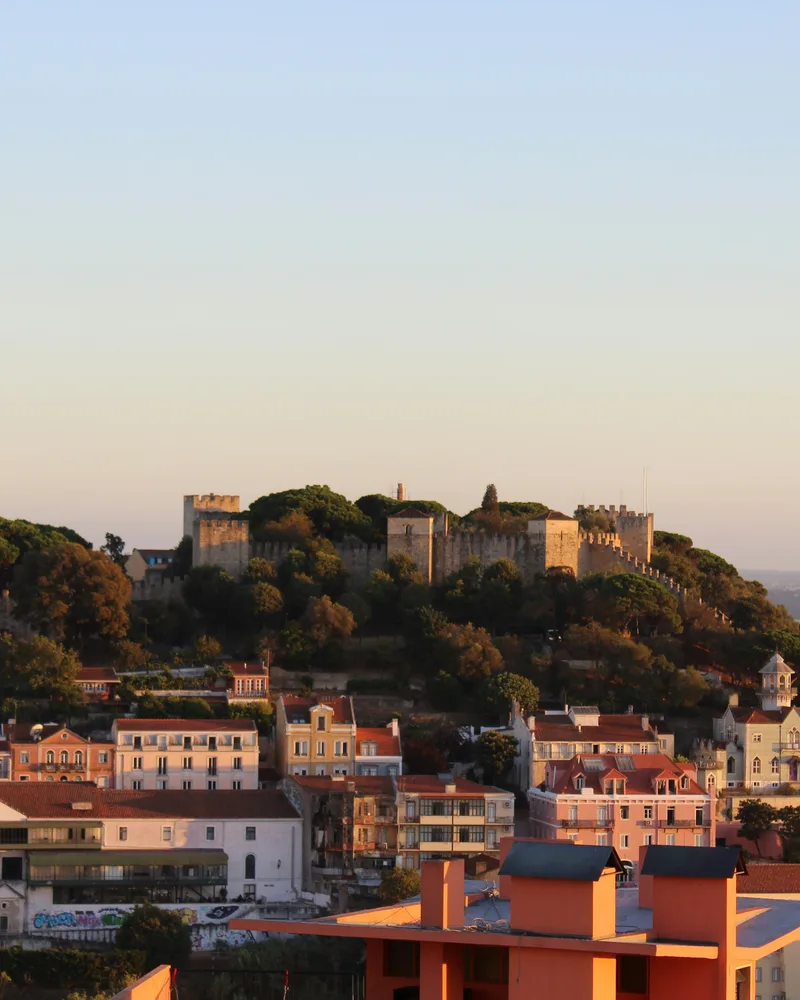
The eleven towers
Every ticket opens the whole citadel: the castle, the ramparts, the archaeological site and the Camera Obscura. Choose the tower that matches who is coming.
Ages 13–25 (photo ID required)
€20per person
Ages 26–64
€30per person
Ages 65+ (photo ID required)
€27per person
Open date, any day.Your ticket is valid on any day within 90 days of purchase, during opening hours. No slot, no calendar, no queue at the ticket office.
Children under 12 go free.Add them to the same booking as the paying adult so the party matches at the gate. Your e-ticket arrives by email within hours and is re-sent the day before you plan to climb.
The climb through Alfama
What the hill has been, in the order you meet it on the way up.
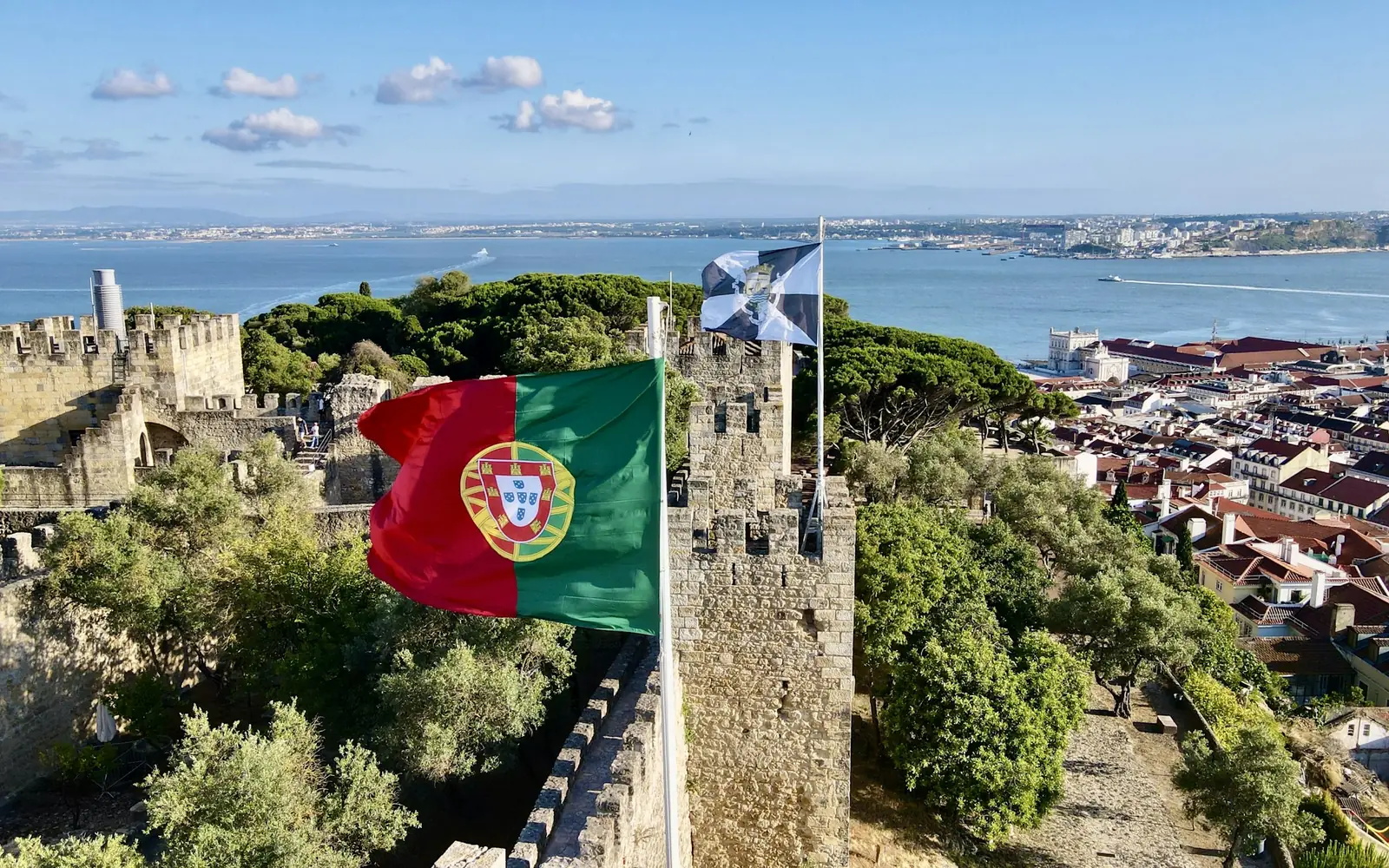
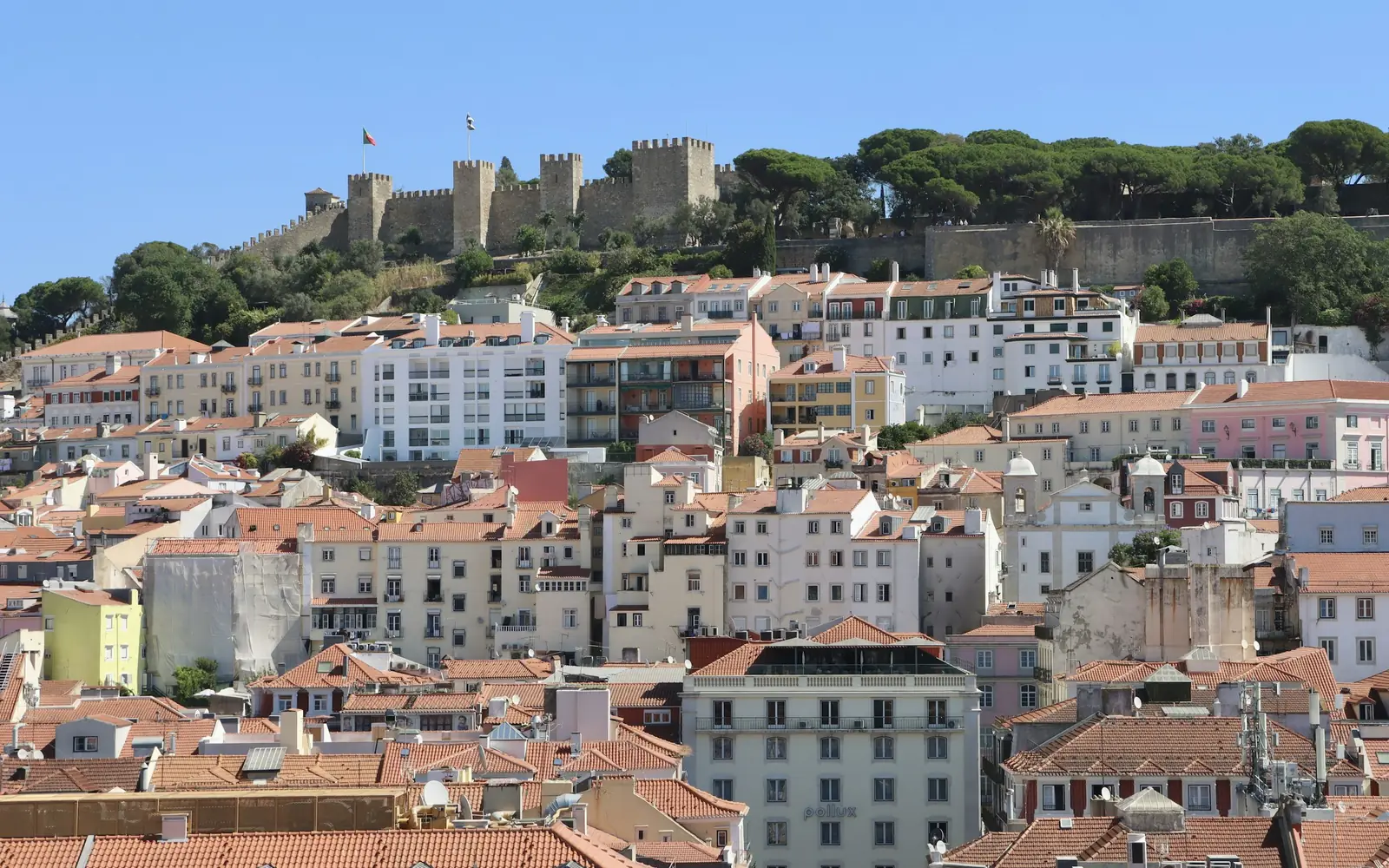
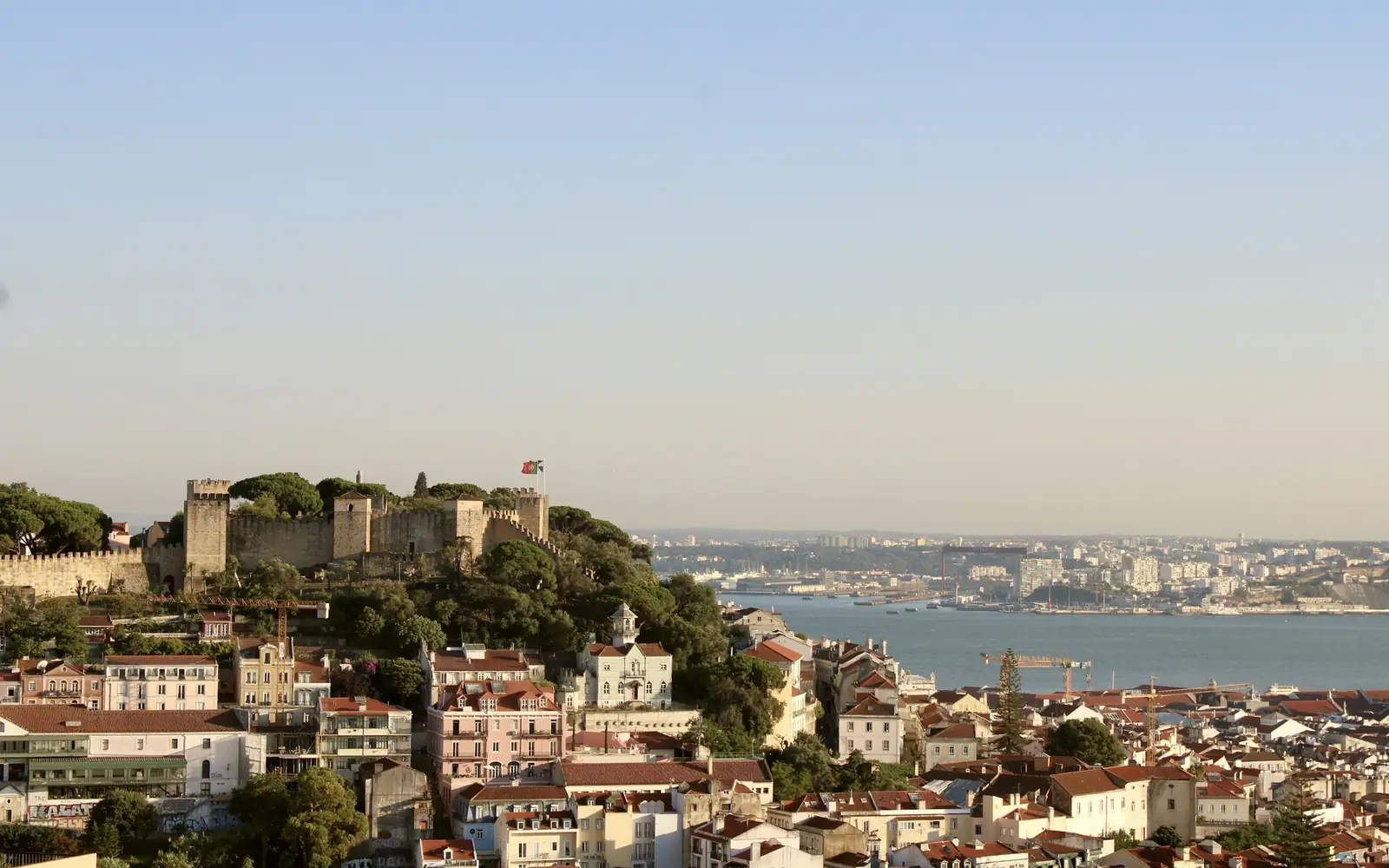
Castelo de São Jorge sits on the highest hill in central Lisbon — the Hill of São Jorge — looking down over the Tagus estuary, the old Alfama quarter, and the city's seven other hills. From the ramparts on a clear day you can see almost the entire historic centre laid out below, the river opening to the Atlantic, the suspension bridge, and the south bank thirty kilometres away.
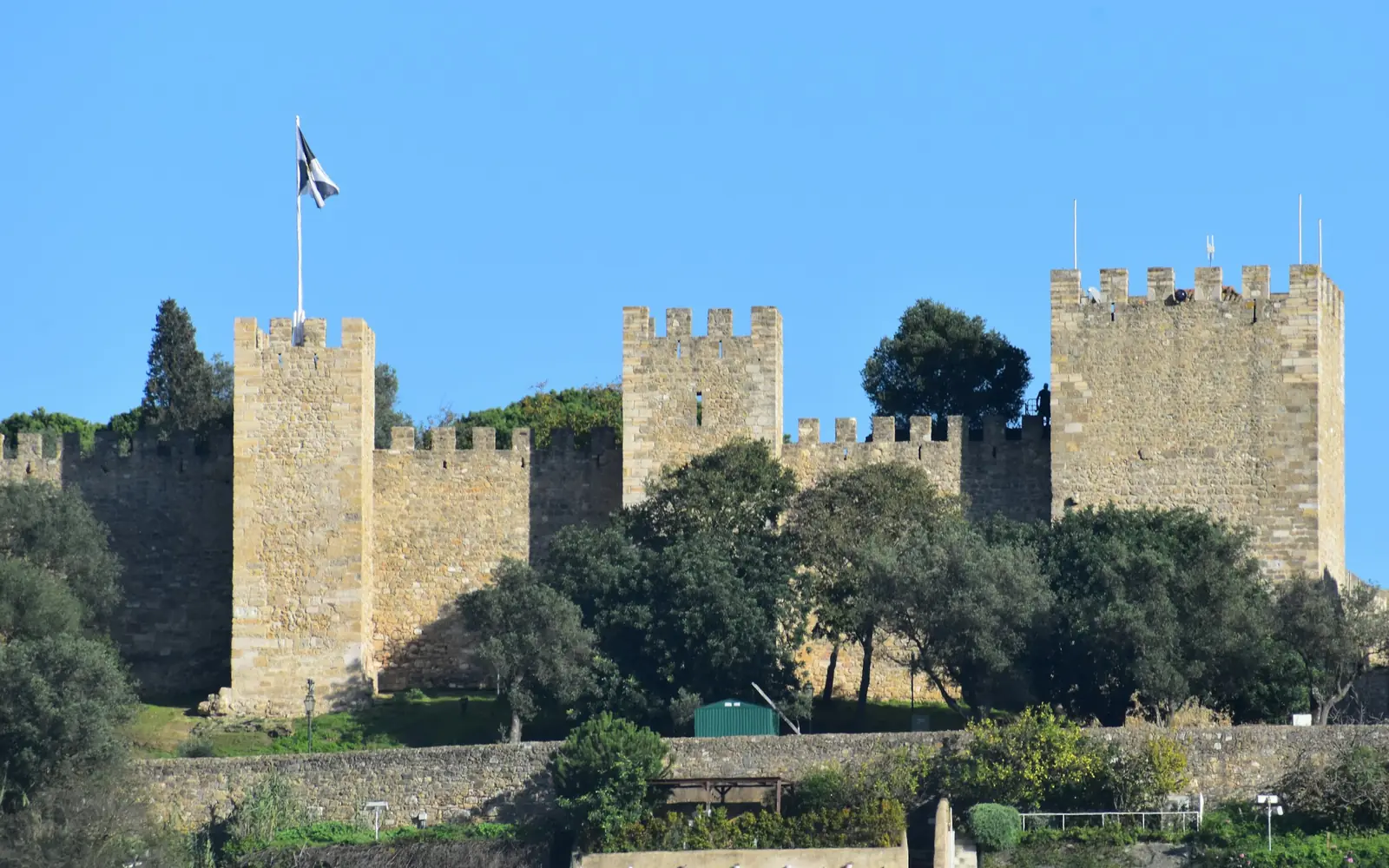
The site has been continuously occupied since at least the Iron Age. Phoenicians, Romans, Visigoths, and the Umayyad Caliphate all used the hilltop. The visible fortress is essentially a Moorish castle — built and expanded between the 8th and 12th centuries by the Muslim rulers of Lisbon. Then in 1147, during the Second Crusade, King Afonso Henriques laid siege to the city for 17 weeks; the castle fell on 25 October.
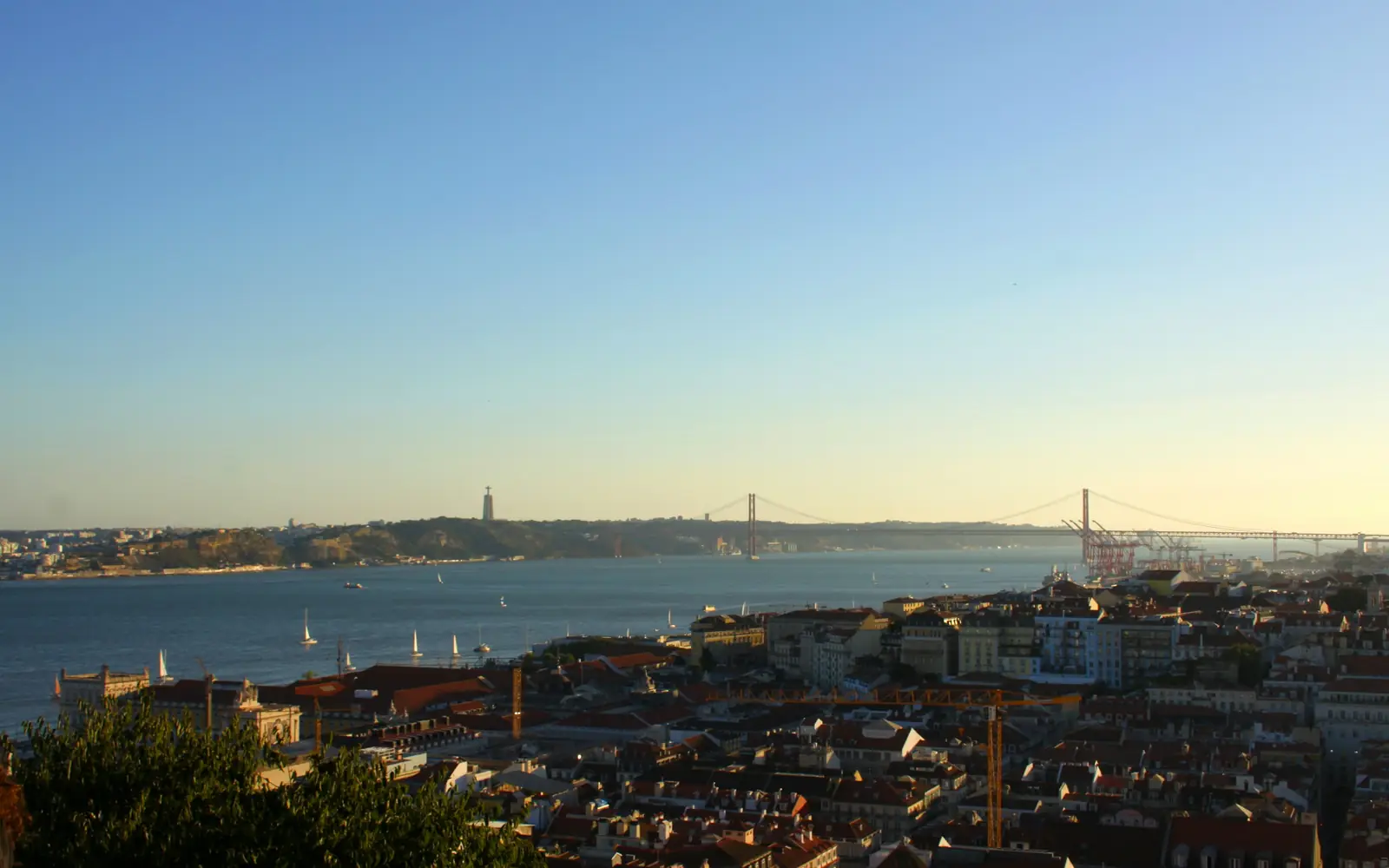
For the next four centuries this was the royal residence of the Portuguese crown — the Alcáçova — through the great age of Portuguese exploration. Vasco da Gama was received here on his return from India in 1499. The 1755 earthquake destroyed the royal palace within the walls; the crown moved out and never moved back. Today it is operated by the Castle as a national monument and museum.
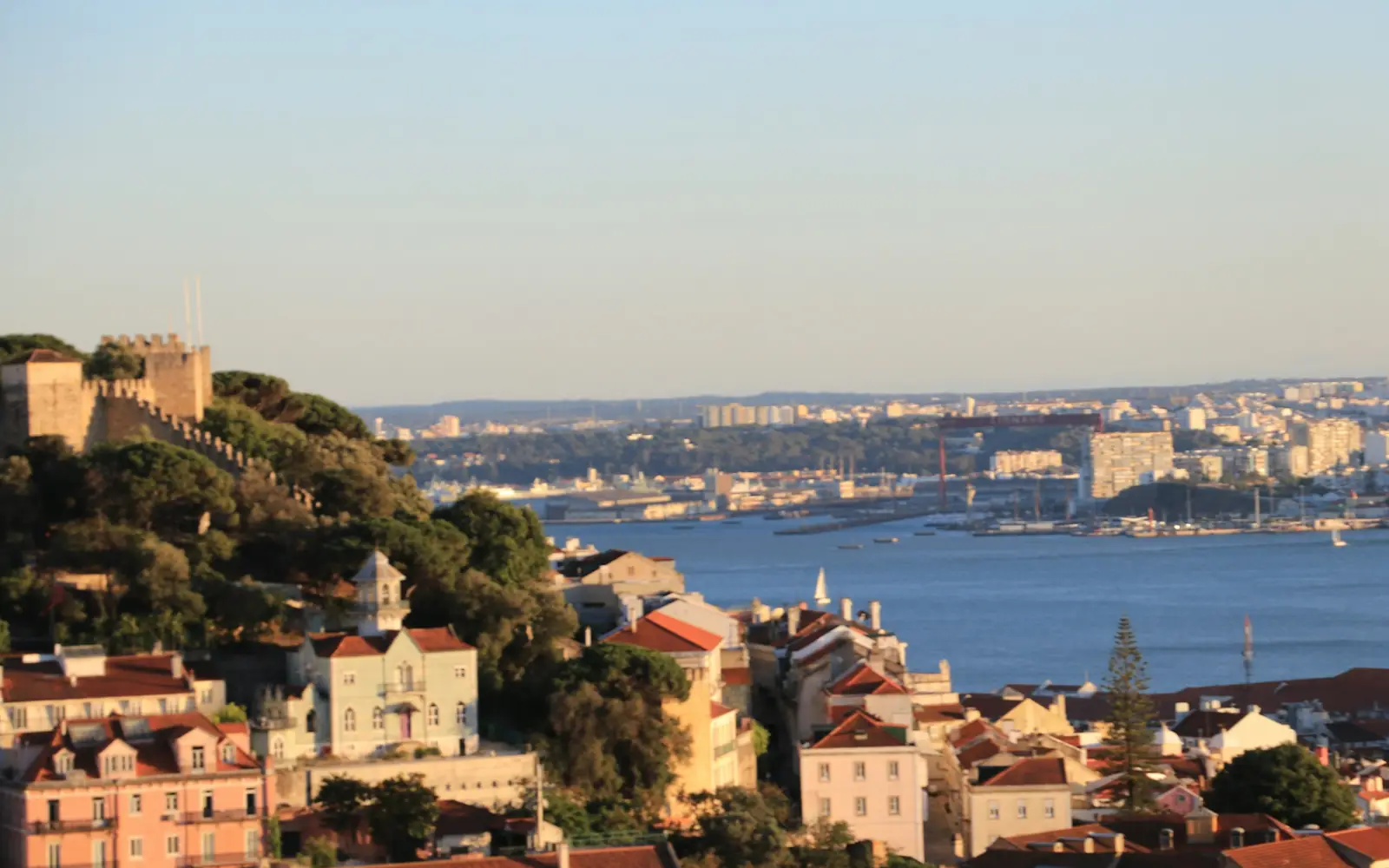
The Camera Obscura
Turn the lens to one at a time: what is included, and what booking through us changes.
Your currency, final price.
Best times, secret spots, the room most miss.
Mobile ticket, ready in your inbox.
Real people, any hour, any time zone — 24/7, in your own language, right through to your visit day.
Walk past the ticket office straight to the gate
The medieval-style optical projection of the city in the Tower of Ulysses
All three zones on a single ticket
The loophole wall
Each stone in the wall opens on one question: the towers, the Camera Obscura, the reconquest, the peacocks, the strata under your feet.
Castelo de São Jorge — Saint George's Castle — is a medieval Moorish-built fortress occupying the highest of Lisbon's seven hills, in the heart of the historic Alfama quarter. The fortress complex covers roughly six hectares and includes the inner castle (the Castelejo) with eleven towers, around two kilometres of walkable rampart, the archaeological site preserving Phoenician through Moorish layers, the gardens with their resident peacocks, and several small museums covering the castle's military and royal history.
The site has been continuously occupied for over 2,500 years. Phoenician traders established the first known settlement on the hill around the 6th century BC, attracted by the natural harbour at the mouth of the Tagus. Romans (calling the city Olisipo) used the hilltop as a defensive citadel. Visigoths held it through the early medieval period. The Umayyad Caliphate captured Lisbon in 714 AD and progressively built the stone fortress visible today between the 8th and 12th centuries, when the city was called al-Ushbuna. King Afonso Henriques recaptured it in October 1147 with help from Northern European crusaders en route to the Second Crusade in the Holy Land. From that date until the 1755 earthquake, the castle functioned as the royal Alcáçova — the residence of the Portuguese crown through the great age of overseas exploration. Vasco da Gama was received here on his return from India in 1499.
The castle was renamed for Saint George — São Jorge — in 1378 by King João I, in honour of the Treaty of Windsor signed the year before with King Edward III of England. The treaty was an Anglo-Portuguese alliance against Castile, and Saint George was the patron saint of England. João's mother was Philippa of Lancaster, daughter of John of Gaunt, and he wanted to memorialise the alliance physically in the most prominent monument of his capital.
The Treaty of Windsor is still on the books today and is the oldest continuous diplomatic alliance in the world — six and a half centuries unbroken. Every Portuguese monarch from João I onwards considered Saint George the country's auxiliary patron, and the castle's renaming carried real political weight, not just heraldic decoration. When you walk through the gates today, you're walking through a monument explicitly named for an English alliance — a quiet reminder of how interconnected medieval European politics were.
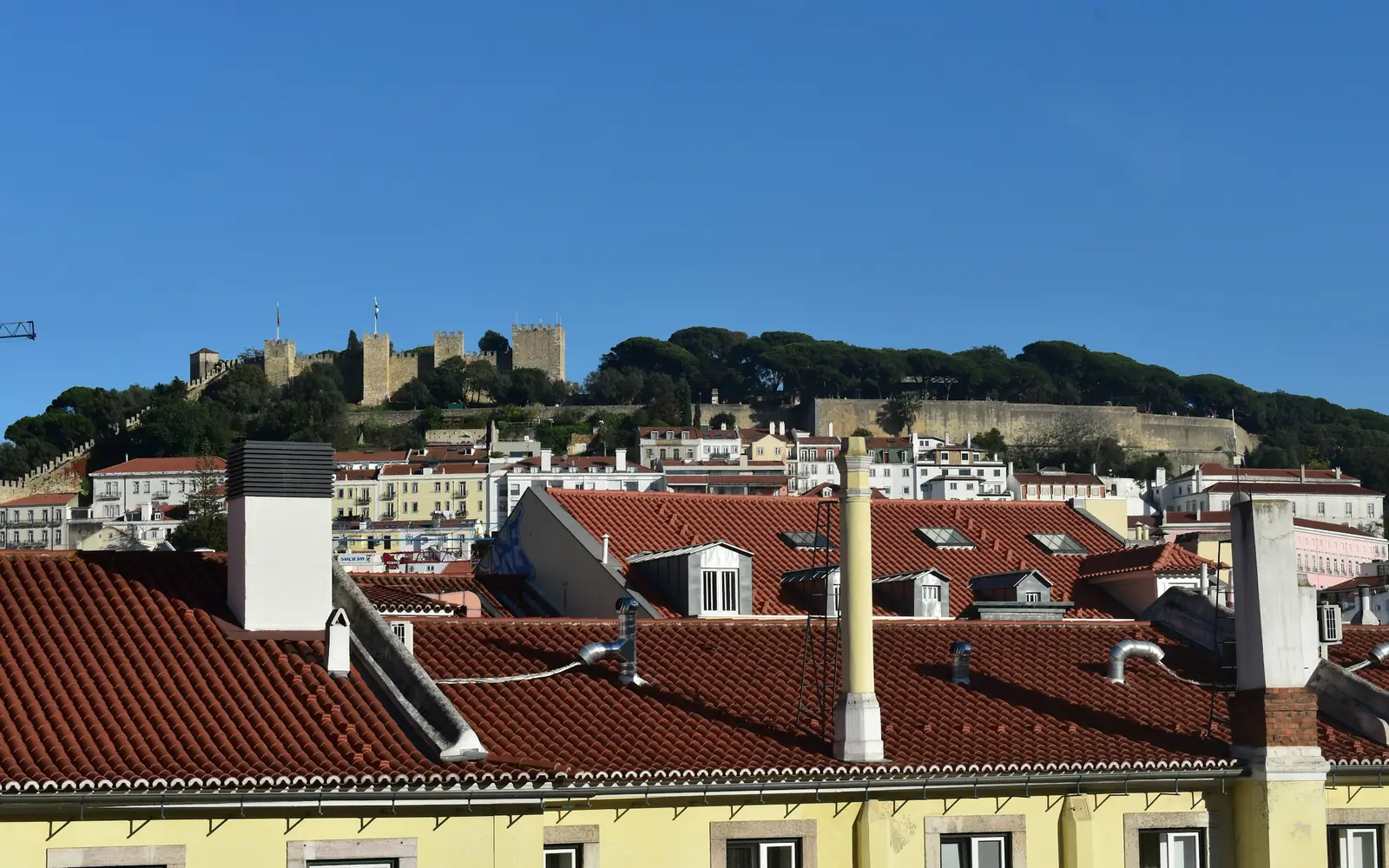
The castle sits on the hill above the Alfama quarter in central Lisbon, about 1.5 kilometres from the Praça do Comércio waterfront. There are four practical routes up. The first is to walk: up through Alfama on cobbled medieval lanes, taking 20–25 minutes from the waterfront, and the most rewarding approach if you have decent walking shoes — fado music drifts out of small bars in the late afternoon and the surviving 1755-earthquake medieval streets give the climb its character. The second is the famous Tram 28 — board it at Praça Martim Moniz or Praça do Comércio and ride it through the old town to Largo das Portas do Sol, then walk the final five minutes uphill to the castle gate. The tram is romantic but is also the most pickpocketed line in Lisbon — keep belongings front-zipped and stay alert. The third is a tuk-tuk — they operate constantly from the waterfront and the major squares, fixed-price negotiations advised before mounting (current pricing varies but reasonable rates from Praça do Comércio are worth establishing before departure). The fourth is the modern Elevador da Glória or a regular taxi, ending with a short walk.
Castelo de São Jorge operates two seasonal schedules. From 1 March to 31 October it opens daily 09:00 to 21:00, with last admission at 20:30. From 1 November to the end of February it opens daily 09:00 to 18:00, with last admission at 17:30. The castle is closed on five days each year: 1 January (New Year's Day), 1 May (Labour Day), 24 December (Christmas Eve), 25 December (Christmas Day), and 31 December (New Year's Eve). During summer evenings, access to the wall-walks and towers may close to the public earlier than the main site, depending on daylight; in winter the rampart areas close at 17:30 for safety. the Castle occasionally adjusts hours for special events, so check castelodesaojorge.pt the morning of your visit if anything in your day is timing-sensitive.
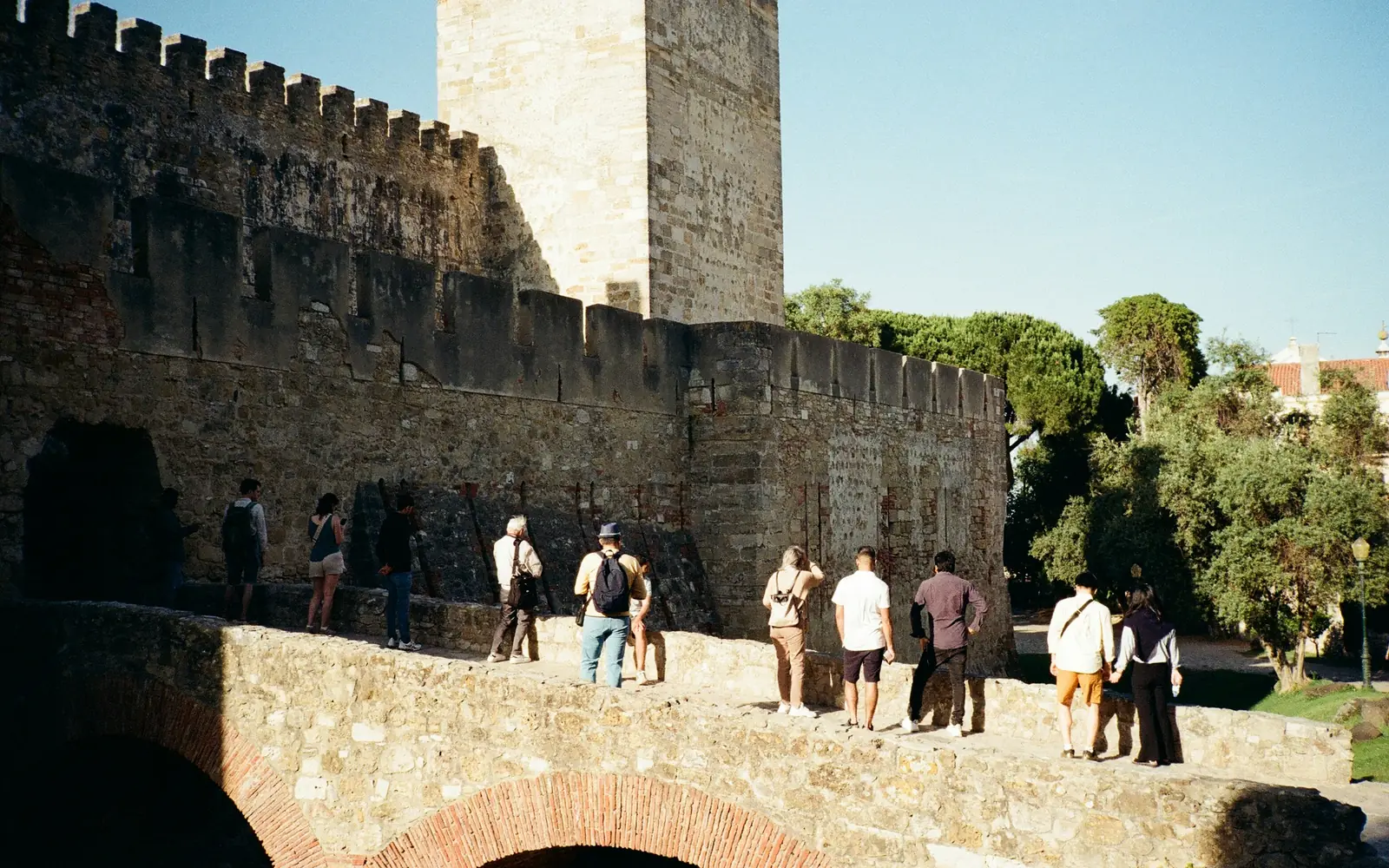
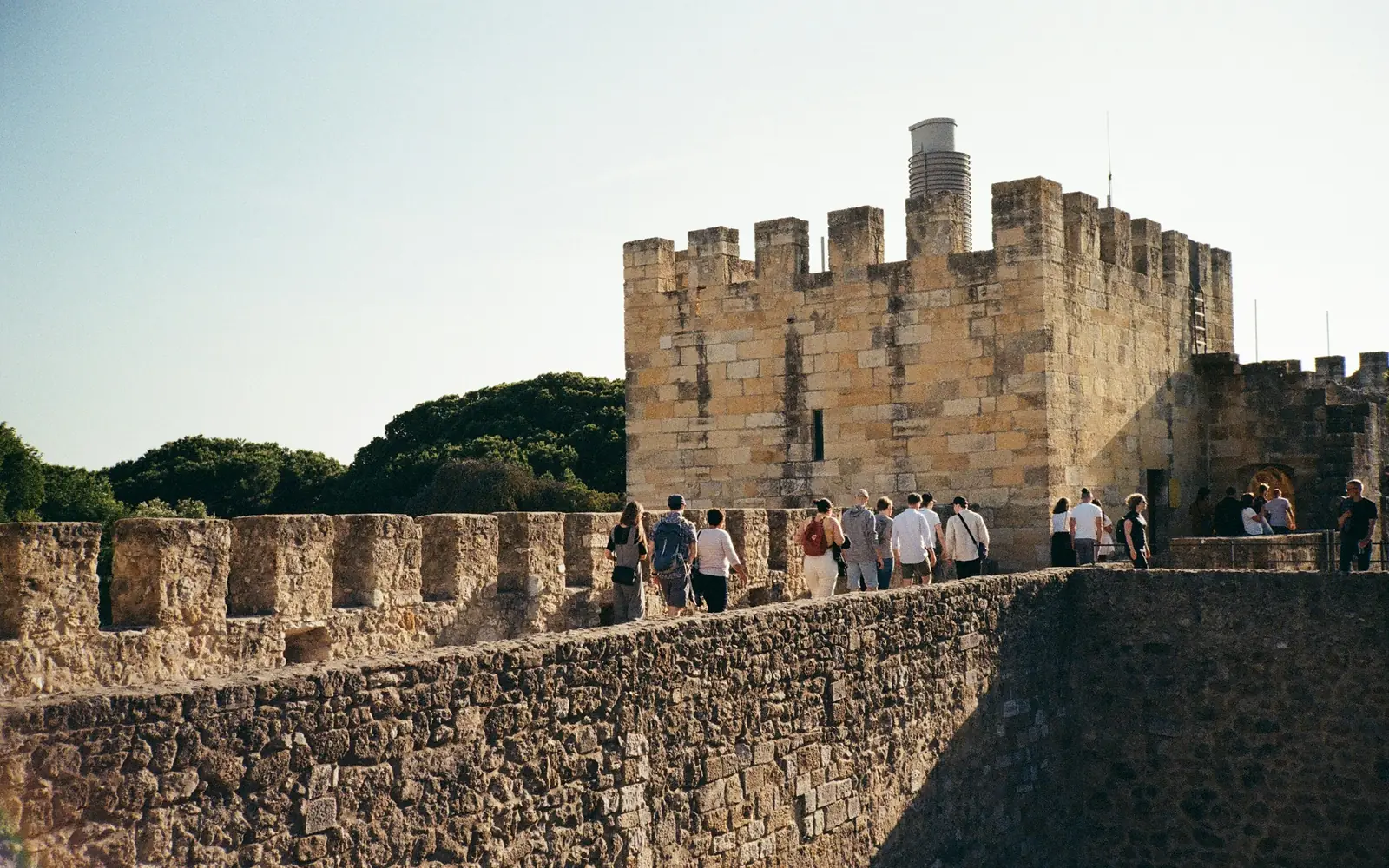
Inside the walls there are five distinct areas worth visiting. The first is the Castelejo — the inner castle, with its eleven towers and the rampart walks giving the panoramic views over Lisbon. Walking the full circuit takes about 45 minutes; key sections include the Tower of Ulysses (which houses the Camera Obscura), the rampart looking east over Alfama and the Tagus, and the inner courtyard with its ancient cisterns. The second is the archaeological site beneath the castle — preserved layers of Phoenician trade-port walls, Roman residential buildings, and Moorish housing, accessible on a self-guided route with interpretive panels. The third is the small permanent exhibition in the former royal residence covering the castle's military and royal history, including the 1147 reconquest, the medieval royal court, and the 1755 earthquake. The fourth is the gardens — terraced spaces with pine trees, olive trees, peacocks roaming free, and benches with views you'd pay restaurant prices to access elsewhere in the city. The fifth is the Camera Obscura itself.
The Camera Obscura, in the Tower of Ulysses, is unusual enough to deserve its own paragraph. It is a working medieval-style optical device — a 360-degree periscope-style apparatus — that projects a live image of the surrounding city onto a concave white screen inside a small darkened room. A guide rotates the apparatus through different bearings and narrates what you're seeing across central Lisbon, the Tagus, and the south bank. The presentation runs about 20 minutes; visits are scheduled in small groups every 30 minutes and the guide rotates between Portuguese and English depending on the audience. Most visitors describe it as the most surprising part of their visit.
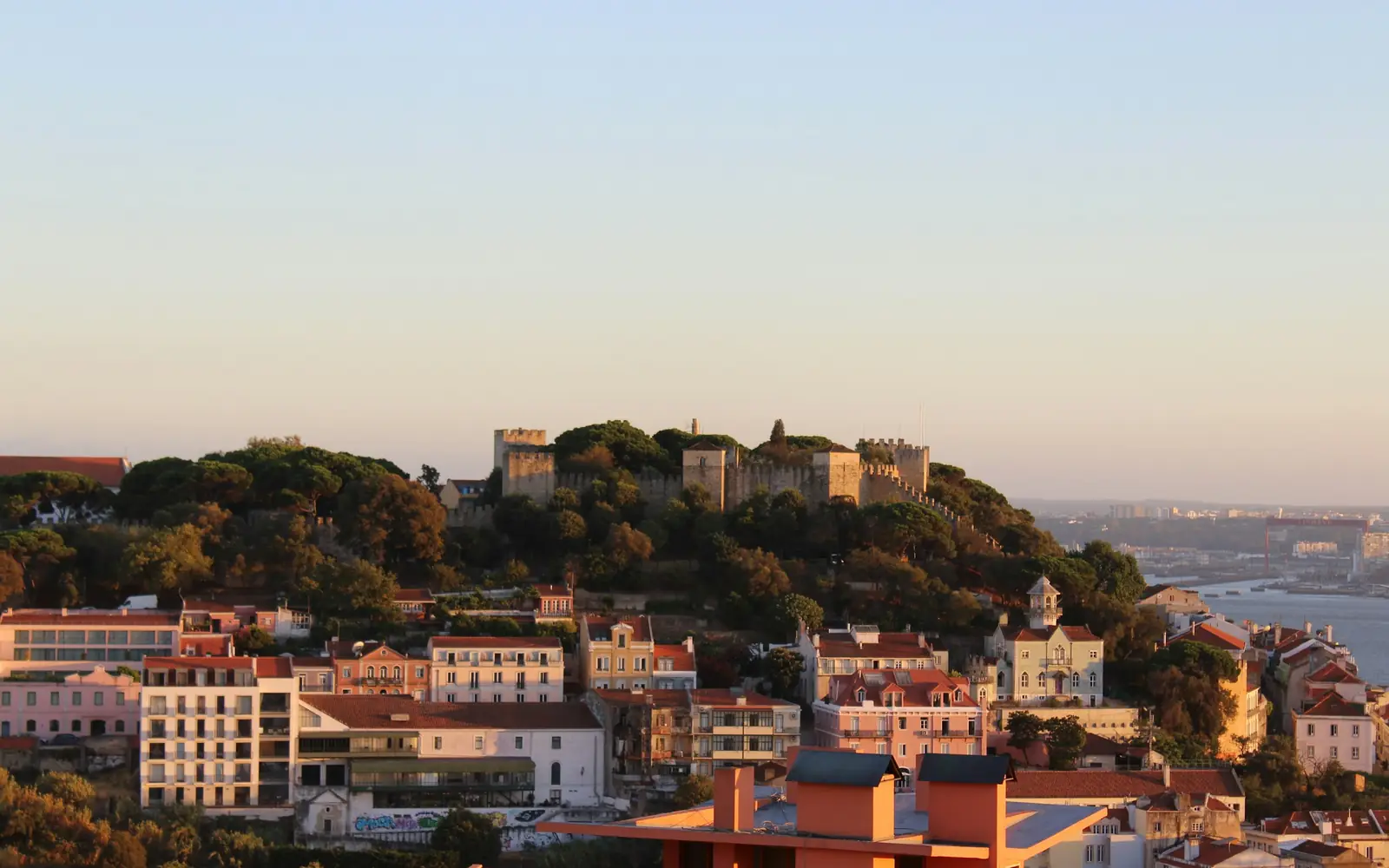
Two windows: the first hour after opening, or the last 90 minutes before sunset. Mornings are cooler, quieter, and the light from the east makes the rampart photographs from the western side particularly clean. But the headline experience is the late-afternoon visit — arriving 90 minutes before sunset puts you on the eastern ramparts at golden hour with the entire Lisbon historic centre below in honey tones, the Tagus opening to the Atlantic, and the Cristo Rei statue silhouetted across the river. It is one of the great evening experiences in Europe.
Avoid mid-morning between 10:00 and 13:00 in peak season (May–September). This is when the cruise-ship and coach groups arrive and the queue at the ticket office can run 45 minutes for walk-up tickets — the queue we exist to bypass. Tuesday through Thursday are reliably calmer than Saturdays. Winter visits (December–February) are noticeably quieter than summer, and Lisbon's mild winter climate means the experience is comfortable year-round. Christmas-season evenings are particularly atmospheric, with the city's Christmas-light installations visible from the ramparts.
Tram 28
Hours, address, the climb, bags and cameras, in the order you will need them.
Summer (1 March – 31 October): daily 09:00–21:00, last admission 20:30. Winter (1 November – 28/29 February): daily 09:00–18:00, last admission 17:30. Closed 1 January, 1 May, 24 December, 25 December, 31 December.
Rua de Santa Cruz do Castelo, 1100-129 Lisboa, Portugal
From central Lisbon, walk up through Alfama (~20 min from Praça do Comércio, steep cobblestones) or take Tram 28 to Largo das Portas do Sol and walk 5 min. Tuk-tuks operate constantly. From Lisbon Airport, Metro Red Line to Oriente then Blue Line + walk, or 20-min taxi.
Partially accessible. Outer courtyards and main viewing terraces are reachable on cobbled paths. The Castelejo (inner castle) involves narrow medieval stairs. Wheelchair users should contact the Castle in advance.
Small bags allowed. Large backpacks may need to be checked at the entrance.
Personal non-flash photography permitted everywhere. Tripods, drones, and selfie sticks discouraged in narrow rampart sections.
The seven hills
Five guides, each a miradouro on the skyline.
The battlements
Every question we have been asked about the ticket, the climb and the view.
No. Castelo de São Jorge tickets sold by the Castle are open-date — they admit you on any single day within 90 days of purchase. We collect a planned visit date at checkout so we can send you weather forecasts and the audio history at the right time, but your ticket is not locked to that date. Show up any day within 90 days and the gate will admit you. If your plans shift, no need to contact us — just use the ticket on a different day.
Entry to the entire Castelo de São Jorge complex: the inner castle (Castelejo) with its eleven towers, the rampart walks with panoramic Lisbon views, the Camera Obscura optical projection in the Tower of Ulysses, and the archaeological site preserving Phoenician, Roman, and Moorish layers beneath the fortress.
Late afternoon. Arriving 90 minutes before sunset puts you on the eastern ramparts at golden hour with Lisbon below in honey tones — the photograph everyone takes home. Mid-morning between 10:00 and noon is coach-tour peak; avoid if you can.
Allow 2 hours minimum, 3 hours if you want to absorb the Camera Obscura, the archaeological museum, and the ramparts at a slow pace.
Tram 28 stops at Largo das Portas do Sol, a 5-minute walk from the castle gate. It's a romantic option but it's also the most pickpocketed tram in Lisbon — keep belongings front-zipped. Walking up through Alfama is more rewarding if you have decent shoes.
Partially. Outer courtyards and main viewing terraces are reachable. The inner castle involves narrow medieval stairs. Contact the Castle at +351 218 800 620 in advance for the most current accessible route.
A working medieval-style optical device in the Tower of Ulysses that projects a live image of the surrounding city onto a concave screen — like a giant in-room periscope. A guide rotates the apparatus through 360 degrees and narrates what you're seeing. Twenty minutes well spent.
Tickets are issued for a specific date and are non-transferable once issued. If your plans change, reply to your confirmation email at least 48 hours before your date and we will rebook your visit to any open slot in the operator's calendar.
The official BOL portal defaults to Portuguese, surfaces MB Way (a Portuguese-only payment app) prominently, and many international cards fail at checkout without a clear error. We handle the portal on your behalf, deliver a clean QR ticket to your inbox, and give you a real human contact if anything changes.
Castelo de São Jorge — Saint George's Castle — is a medieval hilltop fortress crowning the highest of Lisbon's seven hills, in the historic Alfama quarter. The visible walls are essentially Moorish, raised by the city's Muslim rulers between the 8th and 12th centuries, though the hilltop has been continuously occupied for over 2,500 years, with Phoenician, Roman, and Visigothic layers beneath. In October 1147, King Afonso Henriques captured the castle during the Second Crusade, ending Moorish rule of Lisbon. For four centuries it then served as the royal Alcáçova, the seat of the Portuguese crown, until the 1755 earthquake destroyed the palace within its walls. Today it is a national monument and museum. Highlights include the inner castle with its eleven towers, two kilometres of walkable ramparts offering panoramic views over the Tagus estuary, an archaeological site preserving the layered settlement, and the Camera Obscura, a working optical device in the Tower of Ulysses that projects a live, rotating image of the city.
Castelo de São Jorge crowns the highest hill in central Lisbon, above the Alfama quarter and about 1.5 kilometres from the Praça do Comércio waterfront. There is no visitor parking at the gate, and the surrounding medieval lanes are narrow and largely pedestrian, so most people arrive on foot or by public transport. The most atmospheric approach is to walk up through Alfama on cobbled lanes, roughly 20 to 25 minutes from the riverside and steep in places, so wear shoes with grip. The famous tram 28E is the classic alternative: board it at Praça Martim Moniz or Praça do Comércio, ride through the old town to the Largo das Portas do Sol stop, then walk about five minutes uphill to the gate. From the airport or outer districts, bus 737 runs directly to the Castelo stop beside the entrance. Tuk-tuks and taxis operate constantly from the waterfront and the main squares for anyone who would rather not climb.
Foundation stone
Castelo de São Jorge Tickets acts as a facilitator to assist international visitors in purchasing skip-the-line tickets directly from the Castle (Empresa de Gestão de Equipamentos e Animação Cultural) via the official BOL portal. We do not resell tickets — we provide a personalised booking and support service in your own language that bypasses the Portuguese-default UI and the MB Way payment trap. For those who prefer to purchase directly, the castle's official BOL portal is castelosaojorge.bol.pt.
Pay once, in the currency you actually use, and the fee is inside the number. The castle issues your open-date ticket through its own portal, we forward the PDF, and someone who speaks your language stays on the line until you are on the ramparts.
Your five-minute briefing
A short, calm narrative — Phoenicians, Romans, Moors, the 1147 reconquest, the royal Alcáçova, and the 1755 earthquake. Listen on the walk up through Alfama or on the tram.