 Skip-the-line available
 Castelo de São Jorge vs Belém Tower
Lisbon's two most-visited fortifications belong to different centuries, different geographies and different stories. A concierge comparison for visitors deciding between one, the other or both in a single day.
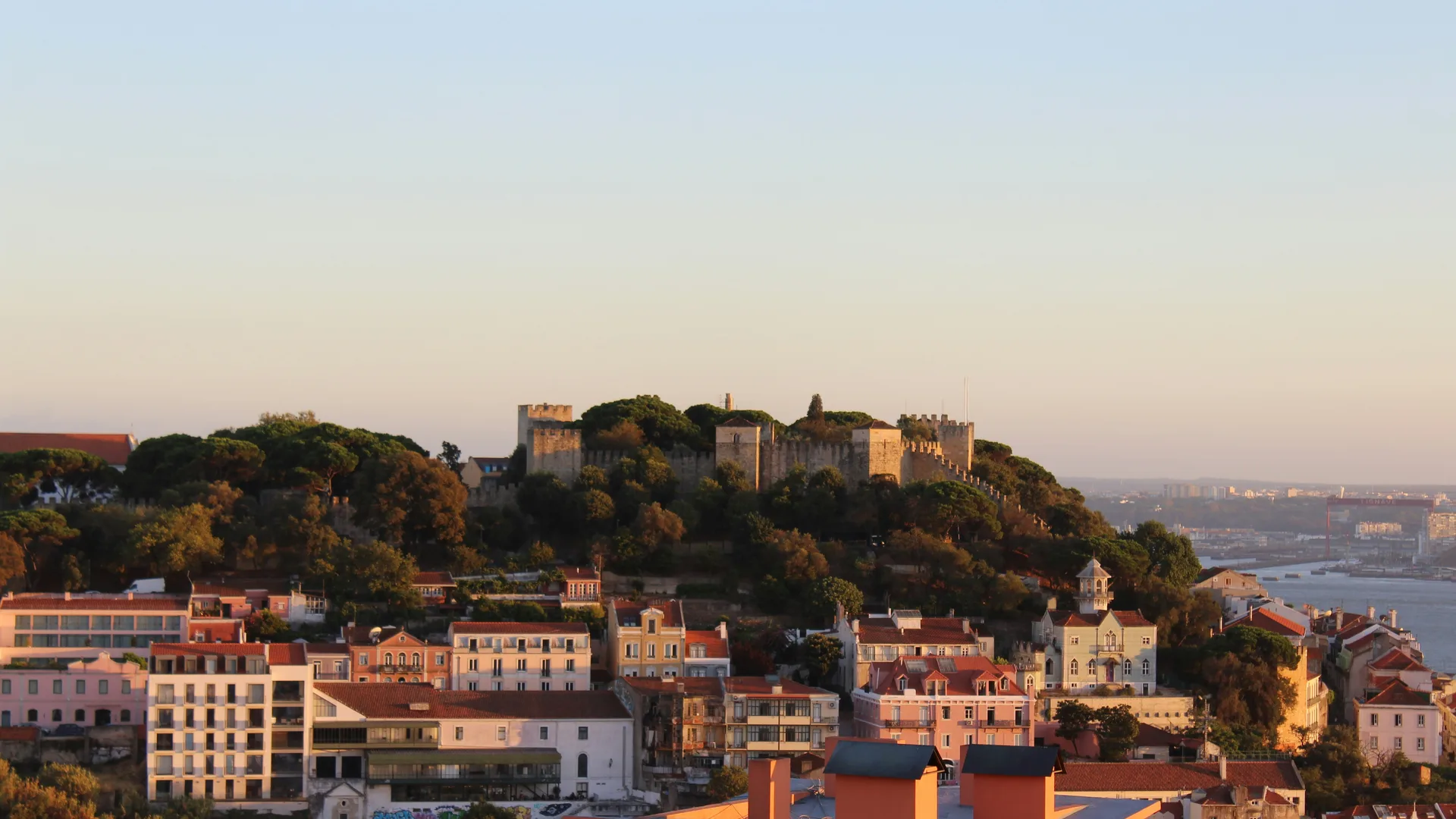
Castelo de São Jorge and Torre de Belém are the two most visited fortifications in Lisbon, and first-time visitors regularly ask whether they need to see both or whether one substitutes for the other. The honest answer is that they are not substitutes at all — they belong to entirely different epochs of Portuguese history, sit in different geographies, and tell different stories about what Lisbon has been. Castelo de São Jorge is an inland Moorish-era citadel on the highest of Lisbon's seven hills, captured by the first King of Portugal in October 1147 during the Christian Reconquista, and serving as the principal royal residence for the next three centuries. Belém Tower is a sixteenth-century Manueline-style fortified gateway on the Tagus, completed in 1519 to defend the river mouth at the height of Portugal's Age of Discoveries. This concierge guide compares them across every variable that matters — architecture, history, views, accessibility, queues and itinerary planning — so you can decide whether to choose one, do both in a single day, or sequence them across two. Where the two genuinely complement each other, we say so; where one clearly substitutes for the other, we say so too.
Two Epochs, Two Architectures
The defining difference between the two monuments is when, and by whom, they were built. Castelo de São Jorge began as a fortified hilltop in pre-Roman Lusitanian times, was substantially rebuilt as a Muslim citadel under the local taifa rulers in the eleventh century, and was captured by King Afonso Henriques on the twenty-fifth of October 1147 during the siege of Lisbon. Its surviving walls, towers and cisterns are predominantly Moorish-era stonework, modified through the medieval Christian period and substantially restored in the late nineteen-thirties. The masonry is characterised by rubble, rammed earth and reused Roman stone — the workmanlike defensive construction of a frontier citadel.
Torre de Belém, by contrast, was commissioned by King Manuel I and completed in 1519, in the high Manueline style — a uniquely Portuguese late-Gothic idiom blending maritime motifs, rope mouldings, armillary spheres and Moorish-influenced loggia work. It was designed by the military architect Francisco de Arruda, drawing on his experience of Portuguese fortifications in North Africa, and it represents a fundamentally different ambition: not a citadel guarding a city against landward attack, but a ceremonial gateway proclaiming a maritime empire to ships entering the Tagus. The two buildings sit nearly four centuries apart in construction date, and they look it the moment you stand in front of either.
What You Actually See and Do at Each
Castelo de São Jorge is an expansive open-air site: eleven ramparts you can walk along, the archaeological remains of the medieval royal palace and the Moorish quarter, a panoramic terrace, the Tower of Ulysses with its camera obscura, a pine-shaded inner courtyard where peacocks roam freely, a café and a permanent exhibition on the castle's history. Most visitors spend between an hour and a half and three hours on site. The experience is fundamentally horizontal and landscape-scale — you move across a hilltop, you encounter sequence after sequence of viewpoints, and the natural rhythm is a slow loop with frequent stops to look out at the city.
Torre de Belém, by contrast, is a single tightly-vertical building. You enter at ground level, climb a narrow spiral staircase controlled by traffic-light signals because the stair is too narrow for two-way traffic, and emerge onto four levels of terraces, chambers and a rooftop battlement. Most visitors spend between forty-five and seventy-five minutes inside. The experience is fundamentally vertical and architectural — you move up through a jewel-box of carved Manueline detail, with the rope-twist columns, armillary spheres and rhinoceros gargoyle that have made the tower one of the most-photographed buildings in Portugal. The contrast between the two visits is the contrast between a hilltop landscape and a vertical sculpture you can walk inside.
Views: Panorama Versus River-Edge
Both monuments are famous for their views, but they look out at completely different things. From the panoramic terrace of Castelo de São Jorge you see all of central Lisbon laid out below: the grid of Baixa, the tumble of red roofs across Alfama, the Cristo Rei statue across the Tagus on the south bank, the twenty-fifth of April Bridge, and the full sweep of the river estuary from upriver to the Atlantic mouth. It is a city-scale panorama, and it is the single most-recognised view of Lisbon — the picture that appears on the cover of guidebooks and at the top of city-marketing campaigns.
From the upper terrace of Torre de Belém you see the river at close range, the Padrão dos Descobrimentos monument a short distance to the east, the south bank of the Tagus directly across the water, and the Atlantic opening to the west. It is a horizon-scale river view rather than a city-scale panorama — the kind of view a sixteenth-century ship's pilot would have used to take his bearings on entering or leaving harbour. Photographers tend to prefer the castle at golden hour for its warm light on Alfama's tiled roofs, and the tower in the bright clear light of mid-morning when the Manueline detail on the river façade is at its most sharply lit.
Crowds, Queues and a Realistic Combination Day
Both sites are busy, but the queue dynamics are different in a way that matters for planning. At Castelo de São Jorge the ticket gate rarely backs up for more than ten or fifteen minutes even in August, because the site is large enough to absorb its peak loads — once you are inside, the eleven ramparts and the archaeological garden distribute the crowd, and the panoramic terrace, while busy, never feels gridlocked. At Torre de Belém the limiting factor is the spiral staircase, which functions as a single one-lane corridor for the entire monument. In peak season the entry queue regularly reaches over an hour, and the staircase itself adds further waits between levels.
Both monuments are best visited within the first hour after opening, but the penalty for arriving late is much higher at Belém Tower. If you can only manage one early start, spend it on the tower. The castle absorbs late-morning arrivals far more gracefully. This single fact is the main reason concierge clients are routinely advised to start with Belém if they are doing both in a day, and finish with the castle in the late afternoon when its light is at its best.
It is entirely possible to see both monuments in one day, and many concierge clients do. One efficient sequence is Belém Tower first thing in the morning — arriving by opening to clear the queue before it builds — then the adjacent Jerónimos Monastery, then a pastel-de-nata stop at Pastéis de Belém, then a tram or rideshare east along the riverfront to central Lisbon, and finally Castelo de São Jorge in the late afternoon for the golden-hour light. Reverse this sequence only if you have a strong preference for morning city light from the castle, but be aware that you'll then meet Belém Tower's queue at its absolute worst between mid-morning and mid-afternoon.
Frequently asked
Should I visit both Castelo de São Jorge and Belém Tower?
If your trip is three days or longer, yes — they tell different stories about Lisbon and are not substitutes. For a one- or two-day visit, choose Castelo de São Jorge for its panoramic views and walkable scale, or Belém Tower if Manueline architecture and the Age of Discoveries are your priority.
Which is older, Castelo de São Jorge or Belém Tower?
Castelo de São Jorge is significantly older. The hilltop has been fortified since pre-Roman times, with substantial Moorish-era walls dating from the eleventh century. Belém Tower was completed in 1519, almost four hundred years later.
Can I visit both in one day?
Yes. The most efficient sequence is Belém Tower at opening to clear the queue, then Castelo de São Jorge in the late afternoon. Allow two to three hours at each site plus around half an hour of travel between them.
Which has better views over Lisbon?
Castelo de São Jorge offers a city-scale panorama of Baixa, Alfama and the Tagus estuary from its hilltop terrace. Belém Tower offers a river-edge view of the Tagus mouth and the Atlantic opening. For Lisbon's skyline, Castelo de São Jorge wins clearly.
Which is more crowded?
Belém Tower's narrow spiral staircase creates much longer queues than Castelo de São Jorge, whose larger site absorbs visitor flow more easily.
Is Castelo de São Jorge bigger than Belém Tower?
Yes, by a wide margin. The castle covers roughly six hectares of fortifications, archaeological garden and viewpoints. Belém Tower is a single building of around four levels.
Which is easier with mobility issues?
Both have accessibility challenges. Castelo de São Jorge offers an accessible lower courtyard but most ramparts and the archaeological site involve cobbles and uneven steps. Belém Tower is reached only by a narrow spiral staircase with no lift and is not accessible for wheelchair users.
What was Belém Tower built for?
Torre de Belém was completed in 1519 as a fortified gateway to defend the mouth of the Tagus and to serve as a ceremonial point of departure and arrival for ships of the Portuguese discoveries.
What was Castelo de São Jorge used for historically?
It served as the principal royal residence of the Kings of Portugal from the mid-thirteenth century until the late sixteenth century, when the court moved to the Paço da Ribeira in the lower town. Before 1147 it was the Moorish citadel of al-Ushbuna.
Which has better photo opportunities?
Castelo de São Jorge is the stronger photographic site because of its panoramic terrace and the variety of vantage points along eleven ramparts. Belém Tower is photographed mainly from outside — the iconic shot is from the riverbank at low tide.