 Skip-the-line available
 Best Time to Visit Castelo de São Jorge
Lisbon's hilltop citadel changes character with the season, the hour and even the weather. A concierge breakdown of when to come for the best light, the smallest crowds and the most comfortable ramparts.
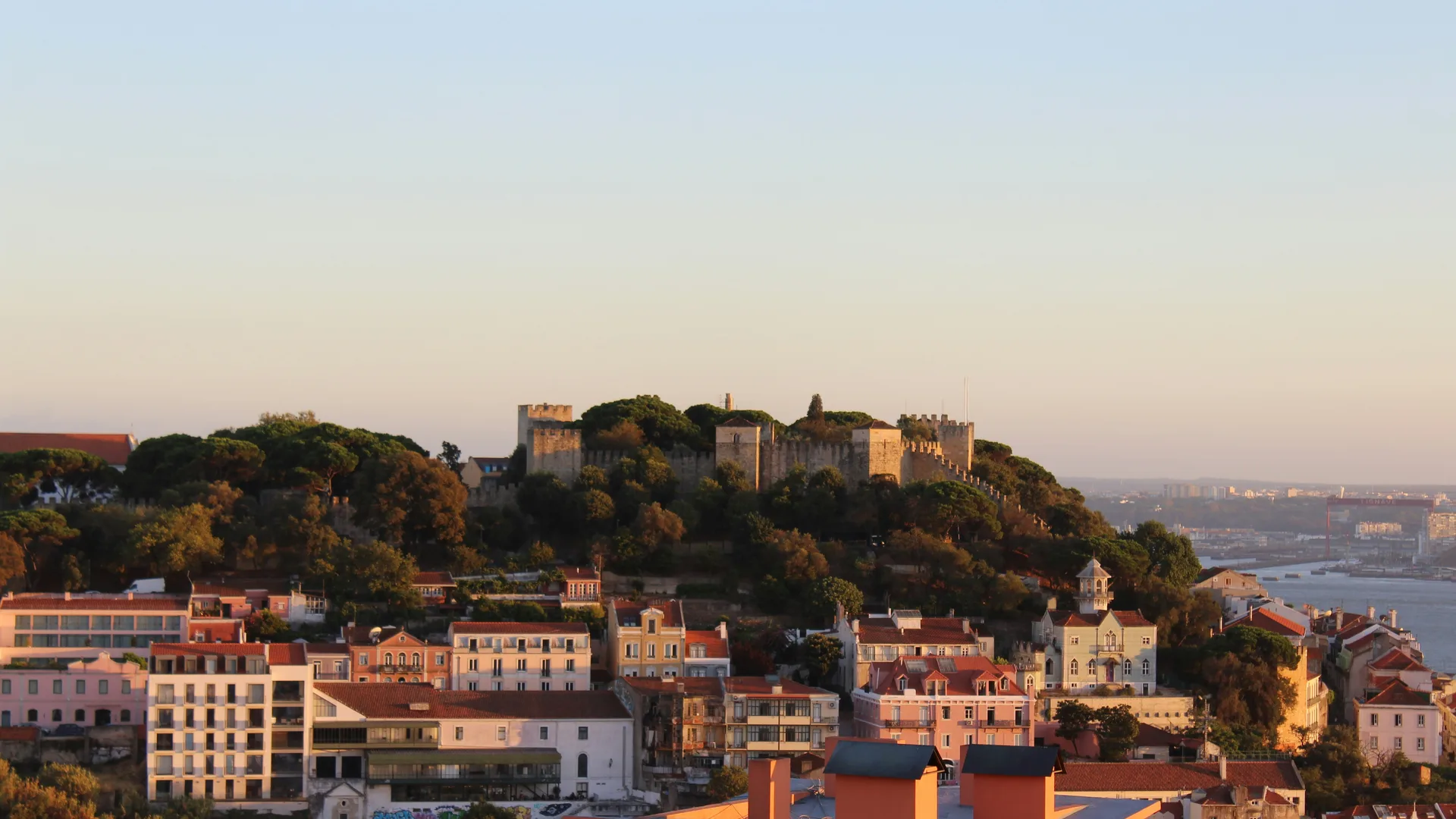
Castelo de São Jorge sits on the highest of Lisbon's seven hills, a Moorish-era citadel that has watched the Tagus for almost a thousand years. Because the site is largely open-air — eleven towers, miles of curtain wall, an archaeological garden, a pine-shaded inner courtyard and a panoramic terrace — the experience changes dramatically with the season, the weather and even the hour. The operator, the Castle, keeps the gates open year-round, but the difference between a serene golden-hour visit in late September and a midday queue in early August is enormous. This concierge guide walks you through every variable that matters: opening rhythm, seasonal temperature, light for photography, school-holiday crowds, the Castle's special programming and the genuine question of how the ramparts feel under a Lisbon summer sun. Every recommendation is weighted toward the reality of standing on exposed medieval stone: shade is scarce, the cobbles are uneven, and the panoramic terrace catches every degree of available heat. By the end, you should be able to pick a date, an arrival hour and a sequence of stops that fit your travel style rather than the operator's marketing photograph.
Opening Hours and the Rhythm of the Day
Castelo de São Jorge operates on two seasonal schedules set by the Castle, its public-cultural-management operator. From 1 March to 31 October the gates open at nine in the morning and close at nine in the evening, with last entry thirty minutes before closing. From 1 November to the end of February the schedule contracts to nine until six, again with last entry thirty minutes before closing. The site is closed on three fixed dates each year: New Year's Day, Labour Day on the first of May, and Christmas Day. Within those windows, the daily rhythm is remarkably predictable, which is the single most useful fact a first-time visitor can know in advance.
The first ninety minutes after opening are reliably the quietest part of any day across every season. Day-trippers arriving on tram twenty-eight from the centre tend to land in waves between half-past ten and one in the afternoon, when the panoramic terrace fills steadily. Early afternoon then brings cruise-ship passengers arriving from Santa Apolónia and Praça do Comércio, and on busy days the queue at the camera-obscura demonstration can briefly stretch past twenty minutes. From around an hour before sunset, photographers settle in along the western parapet, and closing time empties the castle quickly because the cobbled descent through Alfama is slower than visitors expect.
If you have only one window in your itinerary, choose the opening slot. Arriving by quarter past nine gives you a full ninety minutes of near-empty ramparts before the first organised groups appear, plus first-of-day access to the camera obscura when the operator is freshest and the demonstration runs uninterrupted. Late afternoon is the second-best window if you want photography light, but you trade the morning quiet for stronger heat in summer and an earlier closure in winter. Mid-morning to mid-afternoon is the visit pattern most worth avoiding, since it combines peak crowds, peak temperature and weakest light.
Season by Season on the Ramparts
Lisbon's micro-climate gives the castle four genuinely different seasons, and the hilltop intensifies each of them. Spring, from mid-March through late May, is the concierge favourite: daytime temperatures sit in a comfortable range, the archaeological garden is in flower, the peacocks display their tail feathers, and the city skyline below is at its clearest before summer haze sets in. Crowds remain light until Easter week, and the longer evening light pushes sunset usefully past seven o'clock by April. If you are choosing dates and have flexibility, the second half of April and the first half of May are the single best window in the calendar.
Summer from June to early September is the most demanding visit. The unshaded ramparts radiate heat into the early evening, and the panoramic terrace offers almost no relief during midday. The second half of July through the third week of August is also the busiest block of the year because Portuguese school holidays overlap with peak international arrivals. If your trip is fixed in this window, plan around the heat aggressively: arrive at opening, take an extended café break in the pine-shaded courtyard during the worst of the afternoon, then re-emerge for golden hour. Late summer evenings can be magical once the stone has begun to cool.
Autumn from mid-September through October is essentially spring in reverse, with the added bonus of dramatic late-afternoon light over the Tagus estuary. Crowds drop sharply after the first week of September, schools resume across Europe, and visibility over the river is often at its annual peak. Winter from November to February is cool, occasionally wet, and by far the quietest period of the year — entire sections of wall can be yours alone on a Tuesday afternoon. The six-o'clock winter closure trims your golden-hour options noticeably, but the trade for solitude is usually worth it for repeat visitors and photographers who prefer empty frames.
Photography Windows: Golden Hour, Blue Hour and the Camera Obscura
For photographers, Castelo de São Jorge offers two distinct prizes. The first is the panoramic terrace looking west and south-west over Alfama, Baixa and the Tagus — this is the iconic Lisbon shot, the one that anchors most travel features about the city. The light is strongest in the final sixty minutes before sunset year-round, when the white facades of the lower town turn warm gold and the river surface silvers. In high summer this can mean staying close to the eight-thirty mark before the colour peaks; in deep winter the same effect arrives much earlier in the afternoon, which actually fits well with the earlier closing time.
Blue hour — the thirty minutes after sunset, before the sky fully darkens — is the secret window that most visitors miss. The city lights below begin to come on, the bridge over the Tagus picks up its warm sodium glow, and the contrast between artificial light and lingering sky-blue produces images that are notably stronger than the more obvious sunset shot. The summer schedule lets you stay past last entry to catch this window, which is unusual among Lisbon's major monuments. Bring a small bean-bag or fold-out support to steady the camera on the parapet — tripods are permitted but cumbersome on the crowded terrace.
The second photographic prize is the camera obscura inside the Tower of Ulysses, an installation that uses a periscope and lens system to project a live three-hundred-and-sixty-degree image of Lisbon onto a parabolic dish in a darkened room. Demonstrations run roughly every twenty minutes during opening hours, weather permitting. Overcast skies dim the projection considerably, so save it for a bright day — and ideally for the morning when the operator is freshest and the demonstration runs without rush. Photography of the dish itself is permitted without flash; the result is unusual and worth the brief queue.
Special Events and the Lisbon School Calendar
the Castle programmes the castle as a living cultural site rather than a static monument, which means the calendar matters as much as the weather. In December the inner courtyard hosts a small Christmas market with regional crafts and food stalls, typically running on weekend afternoons during the first three weeks of the month. The market is included in standard admission and adds a festive layer to the visit, particularly for families. Summer evenings sometimes carry open-air concerts, theatre and the city-wide Festas de Lisboa programme around the Santo António weekend in mid-June, when the entire Alfama district fills with sardine grills and neighbourhood parties.
Lisbon's school calendar produces sharp local spikes that international visitors often miss when they plan around weather alone. Portuguese Carnival in late February, Easter week in March or April, and the Christmas-New Year period all bring strong domestic-tourism flows, particularly on the mid-morning slots when Portuguese families arrive with children. These spikes can make the panoramic terrace genuinely crowded on days that would otherwise have been quiet by international-tourism standards. If your dates fall in any of these windows, the early-opening strategy becomes more important, not less.
If you are visiting during a programmed event, check the Castle calendar before locking in a sunset slot. Concerts can change ticketing rules for affected hours and occasionally close the panoramic terrace early for stage preparation. For a normal visit, the safest planning rule is simple: target the first hour after opening for any visit between June and early October, target the final two daylight hours for visits in winter, and treat the four hours from midday onward in summer as the window where the experience is at its least comfortable rather than the time you came halfway around the world to feel.
Frequently asked
What is the best month to visit Castelo de São Jorge?
May, September and the first half of October offer the best balance of mild temperatures, long daylight, manageable crowds and reliable visibility over the Tagus. April is excellent if you accept occasional showers.
Is Castelo de São Jorge open every day?
Yes, with the exception of three annual closures: 1 January, 1 May (Labour Day) and 25 December. All other days follow the seasonal schedule set by the Castle.
What time does the castle open in summer?
From 1 March to 31 October the gates open at 09:00 and close at 21:00, with the last entry permitted thirty minutes before closing.
What time does the castle open in winter?
From 1 November to the end of February the castle opens at 09:00 and closes at 18:00, with last entry thirty minutes before closing.
When is the best time of day for photographs?
The final sixty minutes before sunset deliver the strongest light over Alfama and the Tagus. In summer this means staying late into the evening; in winter the same light arrives in the late afternoon.
How long does a typical visit take?
Most visitors spend 90 minutes to two hours. Allow closer to three hours if you want to walk every rampart, see the camera obscura demonstration, and explore the archaeological site at a relaxed pace.
Is the castle very crowded in August?
Yes — the second half of July through the third week of August is the single busiest block of the year. We recommend arriving within 30 minutes of opening or during the final two hours before closing.
Does the castle close for weather?
The castle stays open in rain. Heavy storms occasionally close the panoramic terrace or the upper ramparts for safety, but the archaeological site and Tower of Ulysses remain accessible. The camera obscura requires bright sunlight to project clearly.
Are there shaded areas on the ramparts?
Very limited. The pine grove inside the inner walls offers shade, but the ramparts themselves are exposed. In summer carry water, a hat and sunscreen, and avoid the worst of the midday window.
Is there a Christmas market at the castle?
the Castle typically hosts a small Christmas market in the inner courtyard on weekend afternoons during the first three weeks of December. The market is included with standard admission.