 Skip-the-line available
 How to Get to Castelo de São Jorge
Six legitimate routes up the hill, ranked honestly by time, cost and effort — from the iconic tram 28 to the back-door bus that almost no first-time visitor knows about.
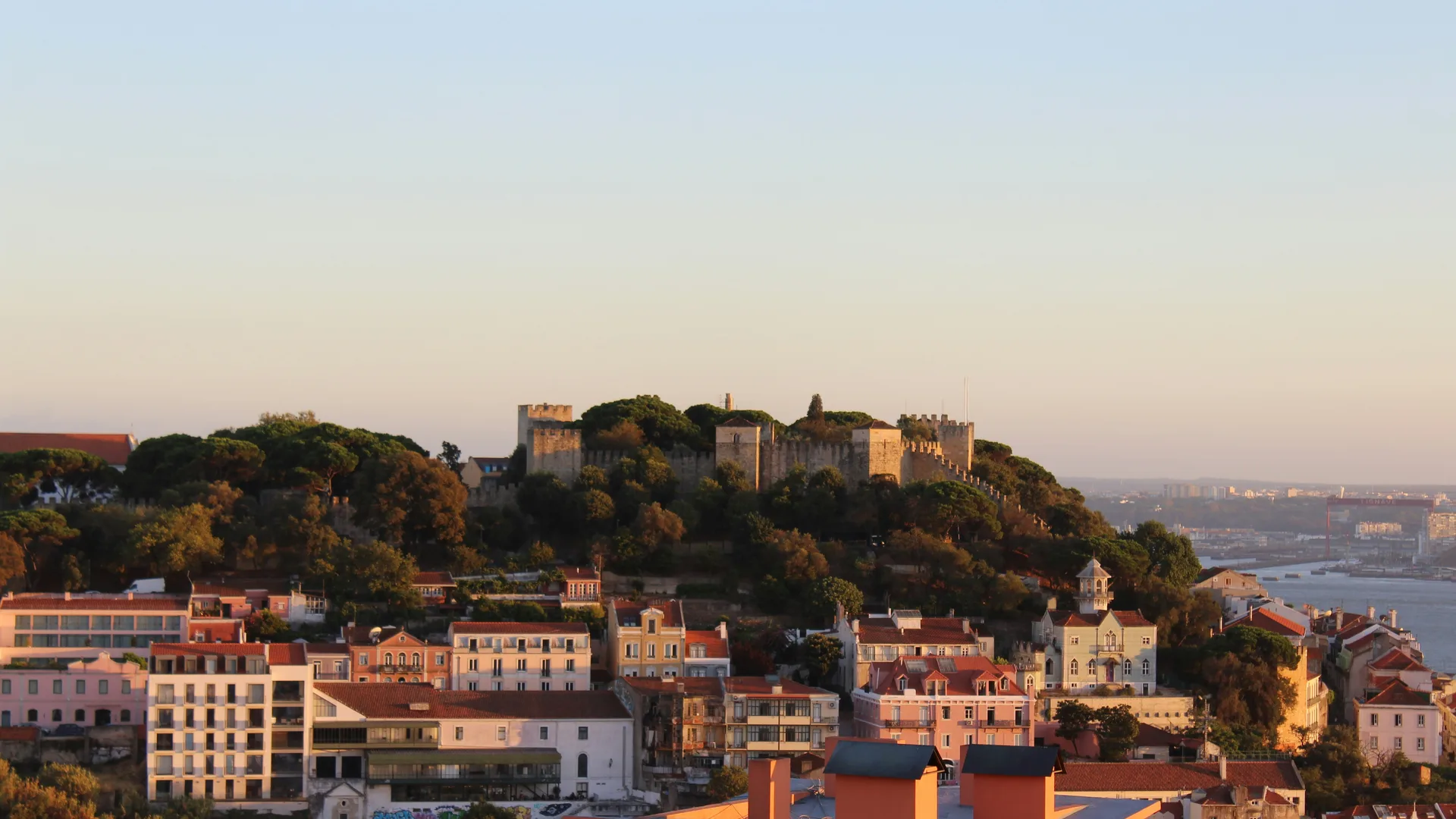
Castelo de São Jorge sits on a steep hilltop above the medieval Alfama district, and that geography is the single most important fact when planning your arrival. There is no metro station within easy walking distance, the nearest tram stop still leaves you with a short climb, and the lanes of Alfama were laid out for donkeys, not modern vehicles. As a result the question 'how do I get there?' has at least six legitimate answers, each with different trade-offs in time, cost, comfort and the experience of the journey itself. This concierge guide compares all of them honestly, from the iconic but invariably overcrowded tram twenty-eight to the dedicated city bus that almost no first-time visitor knows about, to the rideshare option that is often the cheapest and fastest of all. We have walked, ridden and timed each route in different seasons so you can pick the one that fits your group, your knees and your schedule. The right choice depends as much on who is in your party — small children, older travellers, photographers laden with kit — as on the distance from your hotel.
Tram 28: Iconic, Photogenic, Almost Always Full
Tram twenty-eight is the route every guidebook mentions, and for good reason. The yellow Remodelado trams have rattled between Martim Moniz and Campo de Ourique since the mid-nineties, climbing through Graça, Alfama and Estrela on tracks too narrow for any modern vehicle. The Miradouro das Portas do Sol stop is the closest to the castle, leaving a short uphill walk along Rua de Santa Cruz to the main gate. The trams themselves are part of the Lisbon experience — wooden interiors, brass fittings, screeching brakes on the steepest grades, the driver clanging the bell to clear tourists from the rails ahead.
The catch is capacity. Tram twenty-eight runs at standing-room-only from roughly mid-morning until early evening every day of the year, and pickpocketing on board is frequently reported by visitors and the city police alike. The trams have no air conditioning, the windows open only partially, and the standing crush in summer is genuinely uncomfortable. Our concierge advice is to ride tram twenty-eight once for the experience, ideally before nine-thirty from Martim Moniz where the line starts and seats are easier to secure, and to use a different route when you actually need to be at the castle by a specific time. Treat the tram as sightseeing, not transport.
Bus 737: The Local Shortcut Almost No Tourist Takes
Carris bus seven-three-seven is the single most efficient public-transport route to Castelo de São Jorge and the option we recommend most often to concierge clients. It runs at regular intervals from Praça da Figueira in central Baixa directly to the castle's main gate at Largo do Chão da Feira, climbing the back of the hill in roughly twelve minutes. The route was designed specifically to serve the castle, which is why it terminates at the gate rather than passing nearby. Most visitors never discover it because tram twenty-eight occupies all the guidebook real estate, but locals heading up to the castle for a sunset walk overwhelmingly take the bus.
The bus itself is modern and air-conditioned, accepts contactless cards as well as the Viva Viagem rechargeable transport card, and is almost never full because the tourist default is the tram. Sit on the right-hand side as you board for unobstructed views over Mouraria as the bus climbs the back of the hill. From the terminus at the castle gate you walk less than a minute to the ticket office, making bus seven-three-seven the fastest door-to-door option from anywhere in Baixa, Rossio or Praça da Figueira. The combination of comfort, speed, price and convenience makes it the right answer for the majority of visitors who don't specifically want the tram experience.
Walking Up Through Alfama: Slow, Beautiful, Sweaty
If you are arriving from Baixa or the riverfront and the weather is kind, walking up through Alfama is one of the most rewarding ways to reach the castle. The most direct route climbs from Praça do Comércio along Rua da Madalena, past the Sé de Lisboa cathedral, through Largo de Santa Luzia and the miradouro of the same name, then up Rua do Chão da Feira to the gate. The total distance is just over a kilometre, with an elevation gain of about ninety metres — equivalent to climbing a thirty-storey building, distributed over twenty-five to thirty minutes of stepped cobbled lanes.
Expect a comfortable pace to feel slower than it sounds on paper, because Alfama is not a place to march through. The lanes are cobbled, frequently steep, and slippery in rain, so closed shoes are non-negotiable. The compensation is enormous: you pass through the most atmospheric quarter of Lisbon, with fado bars, ceramic-tiled façades, washing lines strung between balconies, and viewpoints arriving in sequence — Miradouro de Santa Luzia and Miradouro das Portas do Sol — each worth a five-minute pause. The walk is best done in cool weather and in good light; in midsummer or after dark we suggest the bus up and the walk back down, when gravity is on your side and the lighting on the cobbled lanes is at its most atmospheric.
Travellers with limited mobility, knee or hip issues, or young children prone to fatigue should not attempt the climb. The cobbles are uneven enough to be a genuine slip hazard for older travellers, and pushing a stroller uphill through Alfama is exhausting work. For these groups, bus seven-three-seven or a rideshare are dramatically better choices, and there is no shame in admitting that the walk is not the right option for every visitor. The viewpoints can be reached separately on a flatter loop from the cathedral.
Uber, Bolt, Tuk-Tuks and the Combination Options
Most visitors are surprised that a rideshare from Praça do Comércio to the castle gate is often the cheapest option in absolute terms, particularly for groups of three or four sharing the fare. Uber and Bolt operate throughout central Lisbon, with Bolt generally a fraction cheaper, and licensed taxis in cream or black-and-green livery cost about the same when metered. Drop-off is at Largo do Chão da Feira directly outside the ticket office, and drivers know the location well. For groups travelling with mobility constraints, heat sensitivity or photography equipment, rideshare is the obvious choice.
The major caveat for rideshare and taxi is traffic. The lanes through Alfama and around Mouraria narrow sharply as the route climbs, and in late-morning and early-evening peaks the climb can add ten or fifteen minutes to what should be a short journey. If you have a timed entry and the day is busy, building a buffer into the booking is sensible. Outside peak hours the climb is genuinely fast, often faster than the tram or the walk, which is why so many local residents heading up to the castle for a quick errand simply book a rideshare rather than wait for transport.
Tuk-tuks queue at Praça do Comércio, Rossio and Praça da Figueira, charging considerably more than a rideshare for the same climb. They are slower, more expensive and more exposed to weather, but the open sides give you a moving viewpoint of the climb through Alfama that a rideshare can't match. We recommend them as a short sightseeing tour rather than transport — a half-hour tuk-tuk loop with the castle as one of three stops is a sensible use of the format, while a one-way tuk-tuk from Baixa to the castle gate is not. The Elevador da Bica funicular, sometimes suggested in guidebooks, runs in the wrong direction up to Bairro Alto and is not useful for a São Jorge itinerary.
Frequently asked
What is the closest metro station to Castelo de São Jorge?
There is no metro station within easy walking distance. Martim Moniz and Rossio on the Green line are the nearest stops, both about fifteen to twenty minutes uphill on foot, or a short connection to bus 737.
How do I get to the castle from Praça do Comércio?
The fastest option is an Uber or Bolt (around eight to twelve minutes). The cheapest is bus 737 from nearby Praça da Figueira. The most atmospheric is walking up through Alfama in around twenty-five to thirty minutes.
Is tram 28 a good way to reach the castle?
Tram 28 is iconic but almost always crowded, with frequent pickpocketing reports. We recommend it as a one-off experience early in the morning, but bus 737 is faster and more reliable when you need to be at the castle by a specific time.
How much does an Uber to the castle cost?
From most central Lisbon hotels in Baixa, Chiado or Bairro Alto, expect a short and inexpensive ride. From Belém or the airport, expect a longer and more expensive trip depending on traffic.
Can I drive to Castelo de São Jorge?
Driving is not recommended. The lanes of Alfama are narrow, one-way and partly pedestrianised, and parking near the castle is extremely limited. The closest public car park is at Chão do Loureiro, a short walk away.
Is the walk up from Baixa difficult?
It is a steady climb on cobbled streets over roughly one and a half kilometres. Most people in reasonable health manage it in twenty-five to thirty minutes with breaks at the miradouros. It is not advisable in heavy rain or for travellers with knee or hip issues.
Where does bus 737 stop at the castle?
Bus 737 terminates at Largo do Chão da Feira, less than a minute from the main entrance and ticket office. It is the only public bus route that reaches the castle gate directly.
Is the castle wheelchair accessible?
Access is partial. The lower courtyard, café and shop are accessible, but most ramparts, the archaeological site and the Tower of Ulysses involve cobbles, stairs and steep uneven surfaces. Bus 737 and rideshare drop-offs reach the accessible courtyard directly.
Are tuk-tuks worth it?
Tuk-tuks cost considerably more than a rideshare for the same climb. They are slower and more expensive, but the open sides offer a panoramic view of the climb. We recommend them more for sightseeing tours than for transport.
Can I take an Uber straight to the castle gate?
Yes. The drop-off point is Largo do Chão da Feira, immediately outside the ticket office. Drivers know the location well, and there is space for one or two vehicles to pause briefly.